
There is a theme in films and streaming series that I am drawn to, and this is around the subject of grief. I recommend some of these films and series for people to help with processing, and understanding the grief that they may be experiencing in their lives.
I began this article a couple months back but having returned from my oldest sister’s funeral this past week, I decided to pull out the article again and finish up exploring what I began.
I’m writing about what I believe is an overlooked gem of a series on Netflix called Lost Ollie. It is based on the William Joyce book, Ollie’s Odyssey. The four part series was created by Shannon Tindle, and directed by Peter Ramsey.
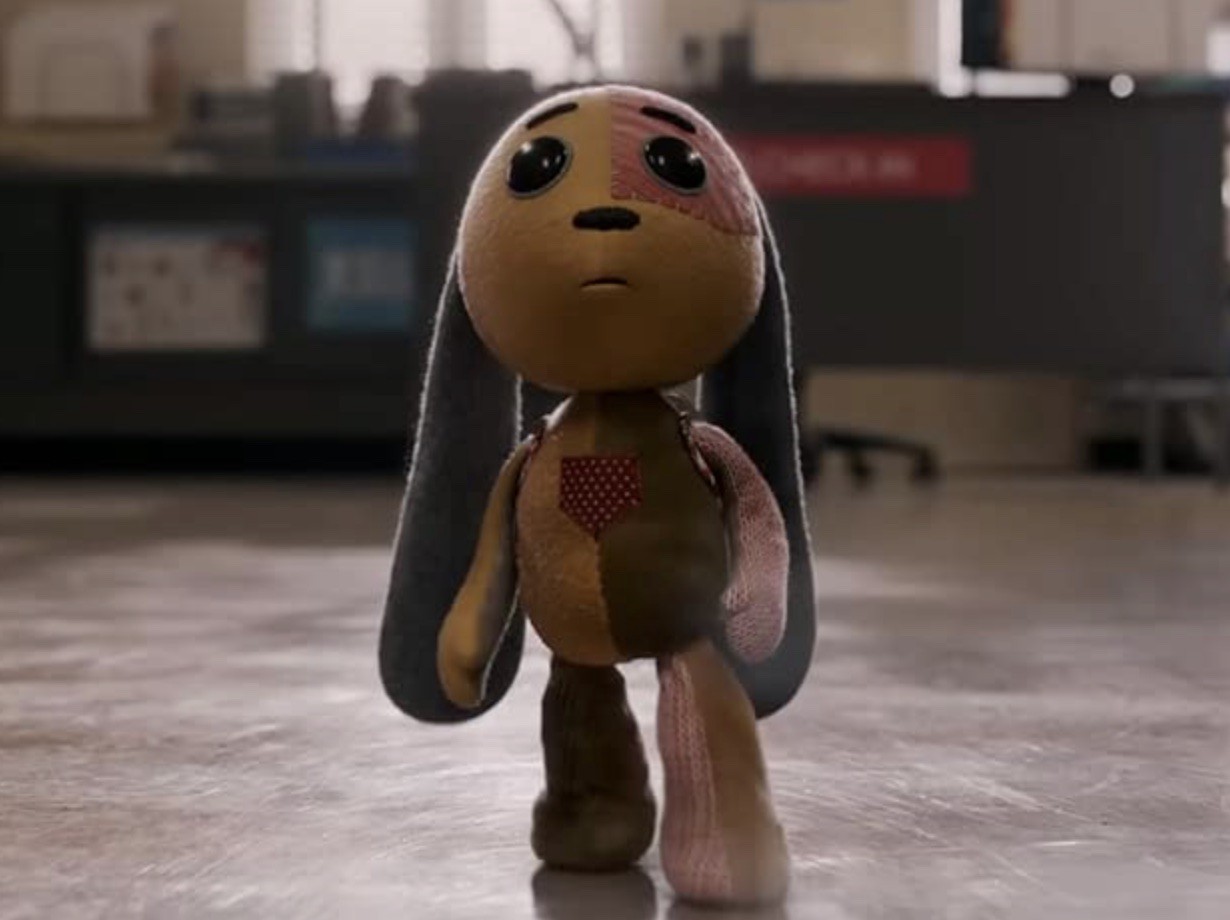
This series is a beautiful portrayal of a family that is balanced between love and loss. While a playful fun series, it also has gravitas. There are some very emotional moments in Lost Ollie, that feel real, while still keeping a foot in fantasy.
Part of why the series feels real is because there is a real connection made to the characters. This is important to help evoke emotions and even catharsisfrom the audience who is engaged with a performance. It hints at what has always driven humans to performances, we become lost in the story. A story resonates with us when it feels true, and very importantly it can speak for us and help us to feel some emotions that we may not be in touch with. This is part of the value that comes from a series like Lost Ollie. It makes you care by virtue of feeling connected to the characters.
On their journey we feel their triumphs and their pain.

At the center of this story are three toys that help to evoke much of the emotions that come up throughout, which is a pretty remarkable thing.
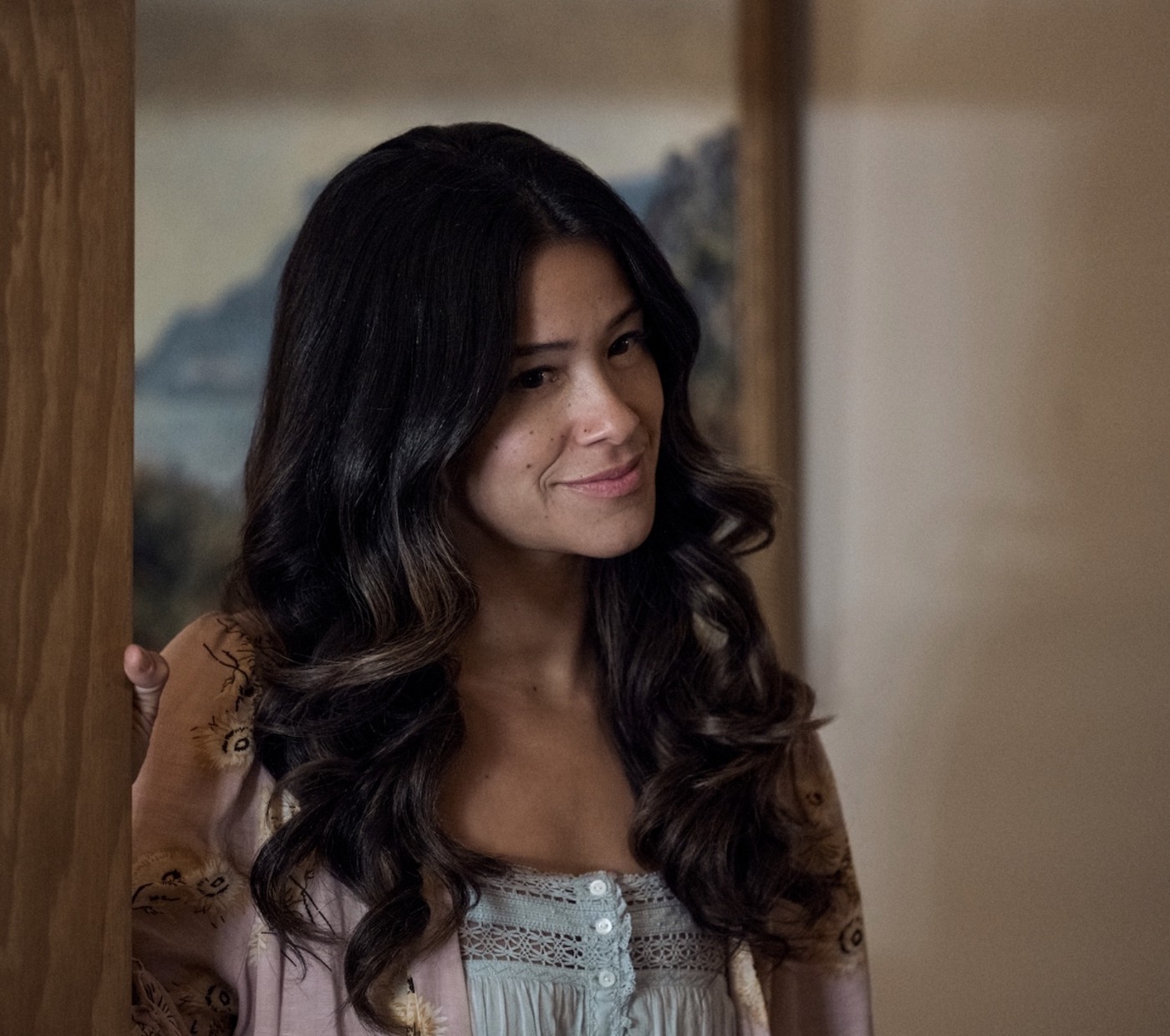
The main characters of this tale are the boy named Billy (Kesler Talbot) and the stuffed bunny Ollie, which is voiced brilliantly by Jonathan Groff. Gina Rodriguez does an amazing job playing a character simply known as Momma, and the trio is complemented by Jake Johnson as Daddy, which I believe is the one character who could have had a bigger role in the series.
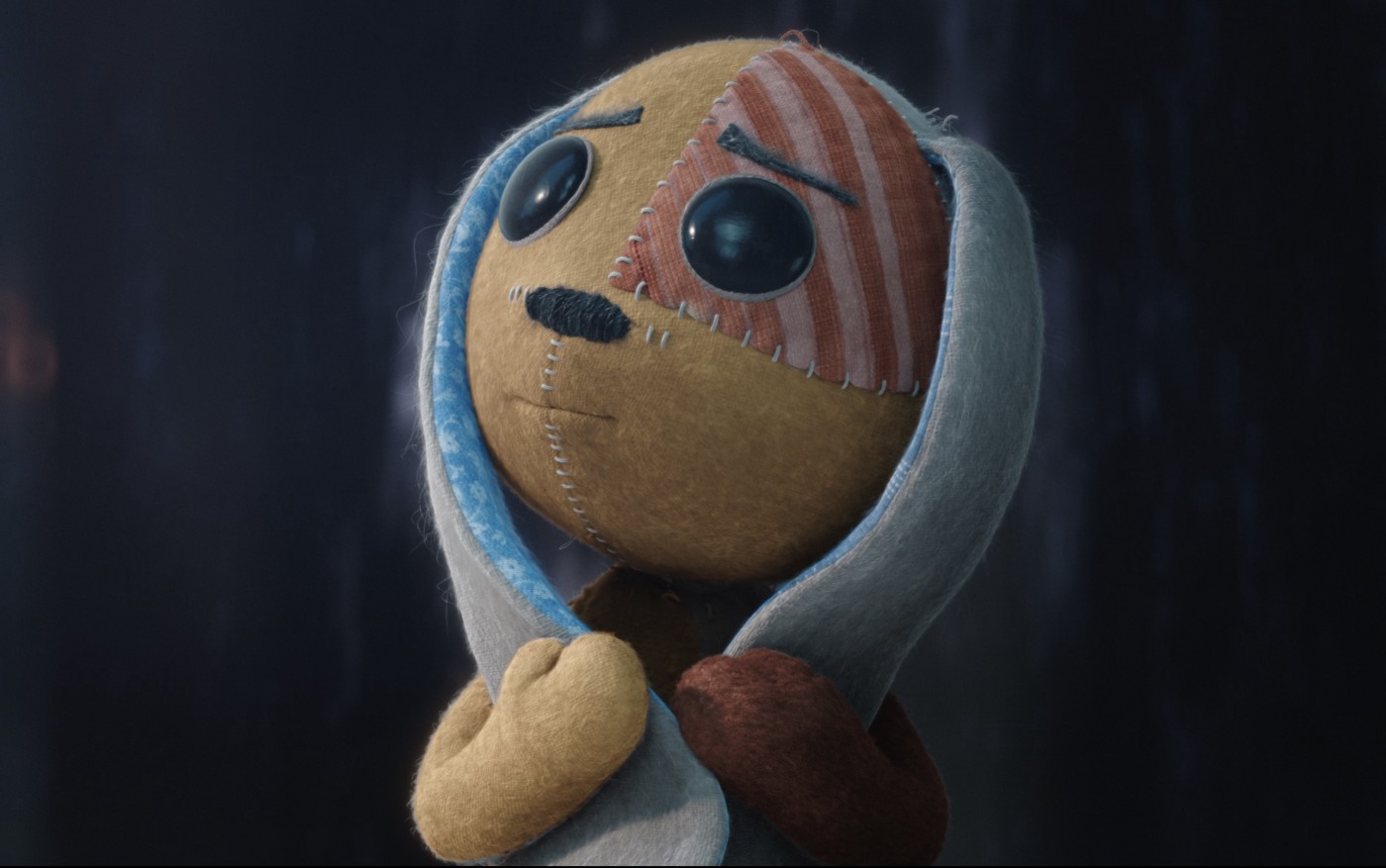
Much of what makes us experience the grief with the characters is that the characters all feel real. Even the stuffed toys feel grounded and real in that way that Toy Story never made the toys feel. These toys feel like part of our world, with the rules that apply to our world, which includes love and loss.
The foundation for the series is built by having great actors such as Gina Rodriguez who plays Momma, and Jake Johnson as Daddy. The characters feel like they belong together, and the heartfelt performances make us believe they are who they say, just as the work of the animators make us believe in Ollie.
TRAUMA
There is another thing happening in the series Lost Ollie though, it isn’t just about grief, and how the various characters are struggling with their own grieving process. We can also find the thread of trauma that can come from feeling abandoned by someone. When discussing the series with my youngest son, he asked why Ollie could not remember what happened to him, and I explained that when people are traumatized, they often shut out difficult memories or dissociate altogether. Ollie represents not just someone grieving but someone who struggles with trauma. Something happened that he is having a hard time facing, just as it did for Billy and Daddy.

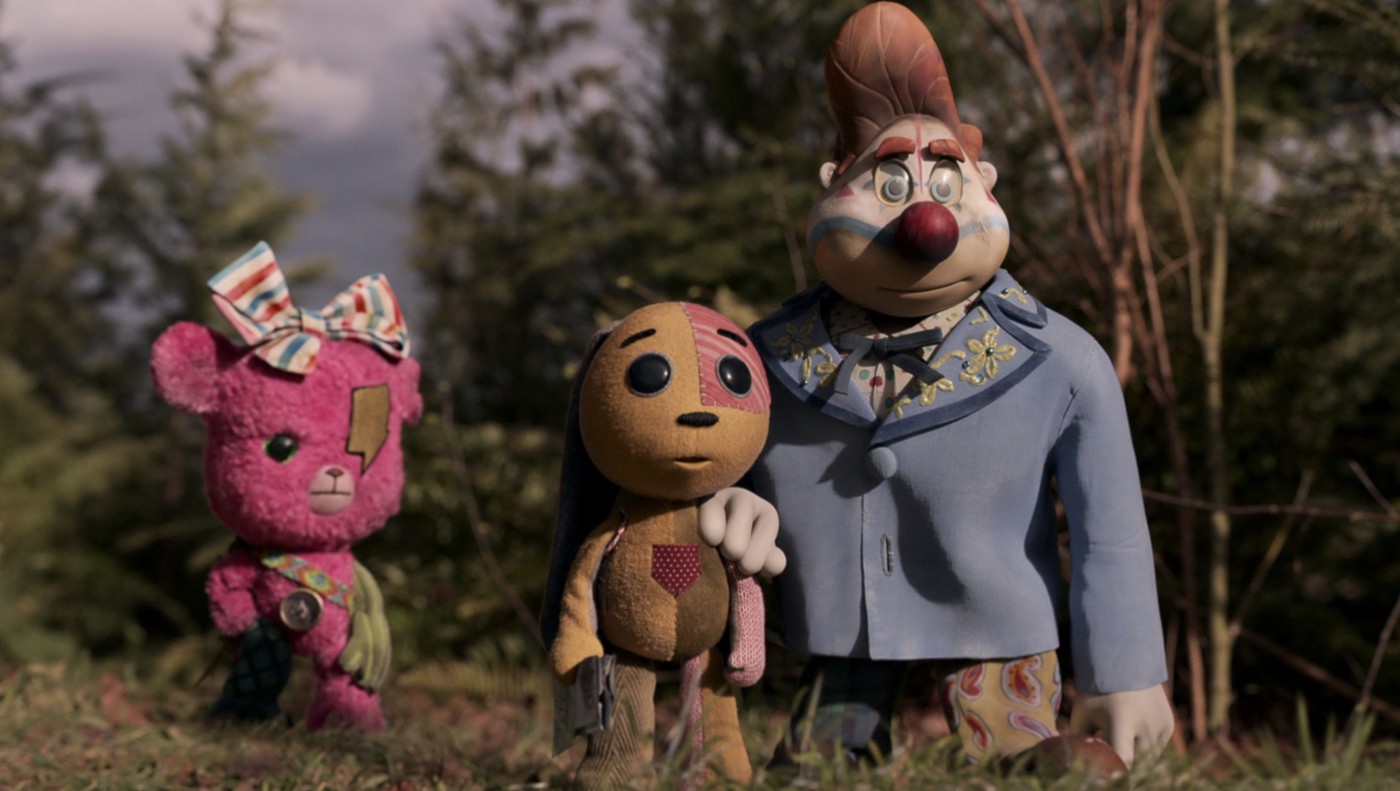
What is important to see is how different characters deal with grief and trauma. For Zozo the clown (Tim Blake Nelson) who first befriend’s Ollie, we see that grief has turned him inward and created pain but also anger.

In the case of Rosy a fierce pink bear, voiced by Mary J. Blige, she grieves for the family she has never known, and the rejection she carries with her.
Ollie though holds tight to things that help to heal him and when he too is confronted by feelings of abandonment and loss, he finds a different message.
I won’t write more about that here except to say each family has their own individual flavor and culture, and Billy’s family had a culture of love and imagination. We see this in the play that is encouraged, the theme of the Dream that is interwoven throughout, and the wall in Billy’s bedroom that amounts to a vision wall. I’ve talked in the past about how we don’t just have the culture we are from like if we are Italian, Irish or Jewish, but each familyhas their own culture. Some families are sports families, others may be military families, some read literature around a dinner table at night (Stephen King I’m pretty sure) and these are the things we weave into our family culture, and pass down through generations.
The culture we create embodies those things we value and wish to pass on.

If Zozo represents the abused child who grows up to be borderline psychotic, and Rosy represents the child who was abandoned and never knew love to begin with, then Ollie represents someone who has known love and family, and this is what galvanizes his resolve to find Billy, and his home.
This too is important because it speaks to the loving home that builds resilience in our children, Ollie and Billy are very loved. That is their family culture which Momma and Daddy helped to weave into the family.
MUSIC
Intermingled with the story of Ollie and Billy is the soundtrack which is both haunting and beautiful. The soundtrack pulls at the heart strings underscoring the themes of the story and tugging at unconscious places within each of us. You do not have to know the words that are being sung by Sara Bareilles, but you may feel them stir things up inside of you. It becomes a soundtrack that carries some of the themes found in love and loss, and this too can be helpful to someone who is grieving.
For those of us grieving a loss in life of a loved one, it may be hard to feel some of what comes up, but Lost Ollie provides a cathartic opportunity for someone who wants a tale, that deals with these themes and probably other themes and emotions that others may find their way to.
FUN AND FAMILY INTERMINGLED WITH EVENTUAL LOSS
At the heart of the story and why Lost Ollie works though is that Billy’s dad and mom feel real for us. Billy’s dad feels somewhat lost dealing and stumbles to regain his footing — but he does not turn out to be the trope of the abusive disconnected dad (thank god).
The themes touch upon something important, that for every family that has strong ties and love, there is intermingled eventual loss.
Loss can look like children growing up and that feeling that comes from having an empty nest. It may come from losing a job, or moving from one home to another. Ultimately, since we are all mortal there is always going to be loss.
Lost Ollie confronts us with the starkness of loss in contrast to the beauty and joy that comes from having a family and loved ones.
THE RUBBER BAND
I’m going to finish this article talking about something I have talked about before, and discuss with clients. That when you have early trauma in life, which may be an early loss, you may feel connected to that event as if by a giant rubber band that gently connects right to your heart.
Imagine it is there behind you as you sit, and it trails off into the distance of your entire life.
If that loss and trauma is a core wound then when you become stressed in your life that rubber band begins to pull tight. Being connected to unresolved trauma and grief can make that rubber band pull back over time and this stores up energy. Then when that stress point really hits, the day that you lose your job, or get divorced, or whatever the event is, that rubber band can snap back to you.
When the rubber band snaps back it delivers all that unresolved emotion, that many of us are good at ignoring, despite feeling the tug of the rubber band.
When it snaps it can create chaos in our life.
WHAT IS THE TAKEAWAY?
Part of my interest in a film or series that deals with grief, loss and trauma, is that we may be able to have a safe catharsis or emotional experience in the theater, that discharges some of the energy of that rubber band. This may happen even if we do not understand it.
The question I have is how can those of us struggling with grief, or loss or depression look to stories to understand our own story in life. Can we use these stories like Lost Ollie, as an inflection point to have a healthy cathartic moment?
Part of doing that means that after the story ends, and the credits roll we can grab the tissues and start to journal about what might have come up for us.
Do we feel that these characters represent parts of ourselves? Can we put some of that emotion on paper either through writing or art and start to identify some of the things that are intertwined with our own story that may create feelings of grief, joy, anger and happiness?
We get to examine our lives through the lens of cinema, and in this case we see the reflection of ourselves in the faces of many characters whether it’s in Daddy, Momma, Billy, Ollie, Zozo or Rosy.
 Follow Your Myth
