The stigma of psychotherapy is something many still struggle with (admittedly women too), but I want to explore a little why it may be difficult for men to be vulnerable and admit they could use some help in this life. I wonder why it is that men would rather wait until the ship is sinking, and their life is up in flames, before admitting it’s time to talk to someone.
Admittedly, I am one of those men.
Although I had a moment of clarity when I was 18 and wished to talk to a psychotherapist after my father died, I was discouraged from doing so by those around me, and it would take another 13 years until I was again in crisis to seek help. If at 18 I had sought help I may have avoided a lot of pain and struggle in my life.
Instead, I felt shame for the need to talk about this loss and all the losses that led to it. I watched helplessly as my ship floundered for years. In short social pressure (and self-doubt) led me to not seek help.

SHAME OF FAILURE
Part of the problem is not just that there is still a stigma around psychotherapy, but that there is shame around needing help. To go to a psychotherapist is to admit that you may not have it all together. That you failed in life in some way, or are broken — at least this is the narrative I believe we tell ourselves. I know this from personal experience, and from working with clients.
Brene Brown, known for her psychological research on shame spoke of shame in her Ted Talk: Listening to Shame. Specifically for men, she says it emanates from the need to “not be perceived as weak.” The opposite of shame is vulnerability, she continues “I define vulnerability as emotional risk, exposure, and uncertainty. It fuels our daily lives.”
AVOIDING VULNERABILITY
Although Brene Brown describes vulnerability as an emotional risk that fuels our daily lives, I would argue that for men, avoiding vulnerability fuels our daily psychic (and often somatic) pain. Men in general are not seeking to be vulnerable, but the opposite, we avoid being vulnerable because as she says it will be perceived as weakness.

It could be that there is a very old part of our thinking that feels the need to continually show we have things under control, that we are the alpha male, or at least not the lowest-ranking omega wolf.
Vulnerability communicates in unconscious ways that we actually may find as distasteful, even if we claim to prize vulnerability in some venues like at a concert, poetry reading, art show, or Oprah Winfrey interview with a royal personage.
Most of the time I would argue we disapprove (like in the workplace). Instead, we value decisiveness, leadership, and strength.
ARMOR PLATED MEN
Perhaps we can agree that at a very young age boys feel the archetypal pressure to avoid vulnerability, and project leadership and strength -we often learn this as we are encouraged to go into physical contact sports.
Indeed for generations, we have been told to man up, be a man, big boys don’t cry, walk it off, build a bridge and get over it, and other variations in these recriminations for physical or social vulnerability. We also use other phrases that show where our values are. We look for the man who will “quarter-back a deal” or someone with “the right stuff.”
We, men, do this until we find ourselves behind a suit of armor that projects strength and we shut down our hearts while internalizing pain — and often when pain comes calling we are awash with confusion because we have not been trained to understand vulnerability.
We prize the strong and silent men, not the vulnerable, and often label the vulnerable as neurotic — but is this all an illusion?

Consider the words of Tavi Castro, the bodybuilder and influencer around fitness when he talks about when he became depressed and suicidal in his life discussing a growing “anxiety about the future, and (feeling) depressed about the past” until he eventually was led to try and take his life.
We can also look to social media bodybuilder sensation Calum Von Moger, a man who is armored with muscle and projects strength, yet he struggled with mental health issues to the point he tried to take his life by jumping out a window in 2022.
Calum Von Moger Attempts Suicide
Calum Von Moger has been in the headlines a lot as of late, but this most recent event is truly troubling. What was…
These stories and others by bodybuilders show us that our men, even those who are projecting strength and physical perfection, are suffering internally. Some are aware and take antidepressants, while others grip tightly to the perception of control.
SHAMEFUL LABELS & SHAMING YOUR FAMILY
There is shame around sharing things with a “stranger” and this may be a cultural thing, to involve outsiders are often considered shameful and a betrayal of the family
Shame may come from the cultural stigma that seeing a mental health expert means you are crazy, nuts, or scrambled. We have a bunch of names for degrading people who struggle with mental health issues — and we have a history of throwing people in asylums (mad-houses) for centuries to deal with all mental health issues.
We shame one another for our perceived weaknesses, instead of seeing our vulnerability as part of being big-brained human beings with a whole lot going on.
So part of the issue here appears to be biological, we need to project our strength if we wish to show we are worthy of mating with and having children.
The other part is the stigma that is learned over many generations, that seeking help makes you look weak — therefore it is shameful not just to yourself, but to the family. Even bigger though is probably fear that weakness in one of our own, reflects that there is something wrong with the family. What if you went to a therapist and told family secrets? Would this betray the family?
In the end, we are left struggling and often suffering alone, guarding family secrets or shame instead of reaching out for help.
We may become lost in that shame not just about being in therapy, but the reasons that may have led to going to psychotherapy — reasons we never get to explore because we simply refuse to go.
NOT KNOWING THE SHIP IS GOING DOWN
For now, I’ll explore one more area. Because we are not schooled in looking for vulnerability and seeking help men simply do not know we are suffering or are in pain. We are not aware of the warning signs, and we are not seeing how we self-medicate.
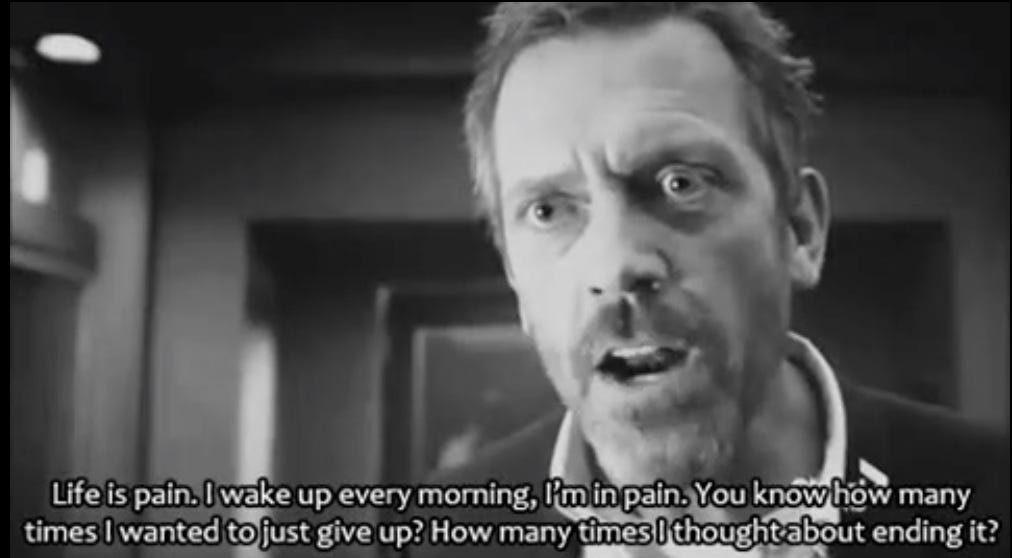
Men may self-medicate through addiction such as alcohol, painkillers, or even things such as porn addiction, gambling, video games, body-building, or being a workaholic. So much of this is about trying to shut down internal pain or in the words of one client who struggles with addiction, “silence the voices in my head”.
It’s hard to know the ship is floundering if you are anesthetizing your pain in some way, or always distracting yourself. You must have some level of self-awareness to know the ship is floundering.
In the series House, which I refer to above, House is not just anesthetizing his pain through a lot of painkillers, but he is also a workaholic who relies on mysterious cases to keep his mind occupied in order to “not feel the pain.” For House, he identifies this pain somatically in his leg, but the truth is that his pain is much bigger than his leg. We know this because he torpedoes his relationships and friendships repeatedly — while also putting his job in jeopardy on a daily basis while acting passive-aggressively towards patients. Additionally, he off-handedly talks about his abusive father and then spends episodes obsessively trying to prove that his father was not his biological father.
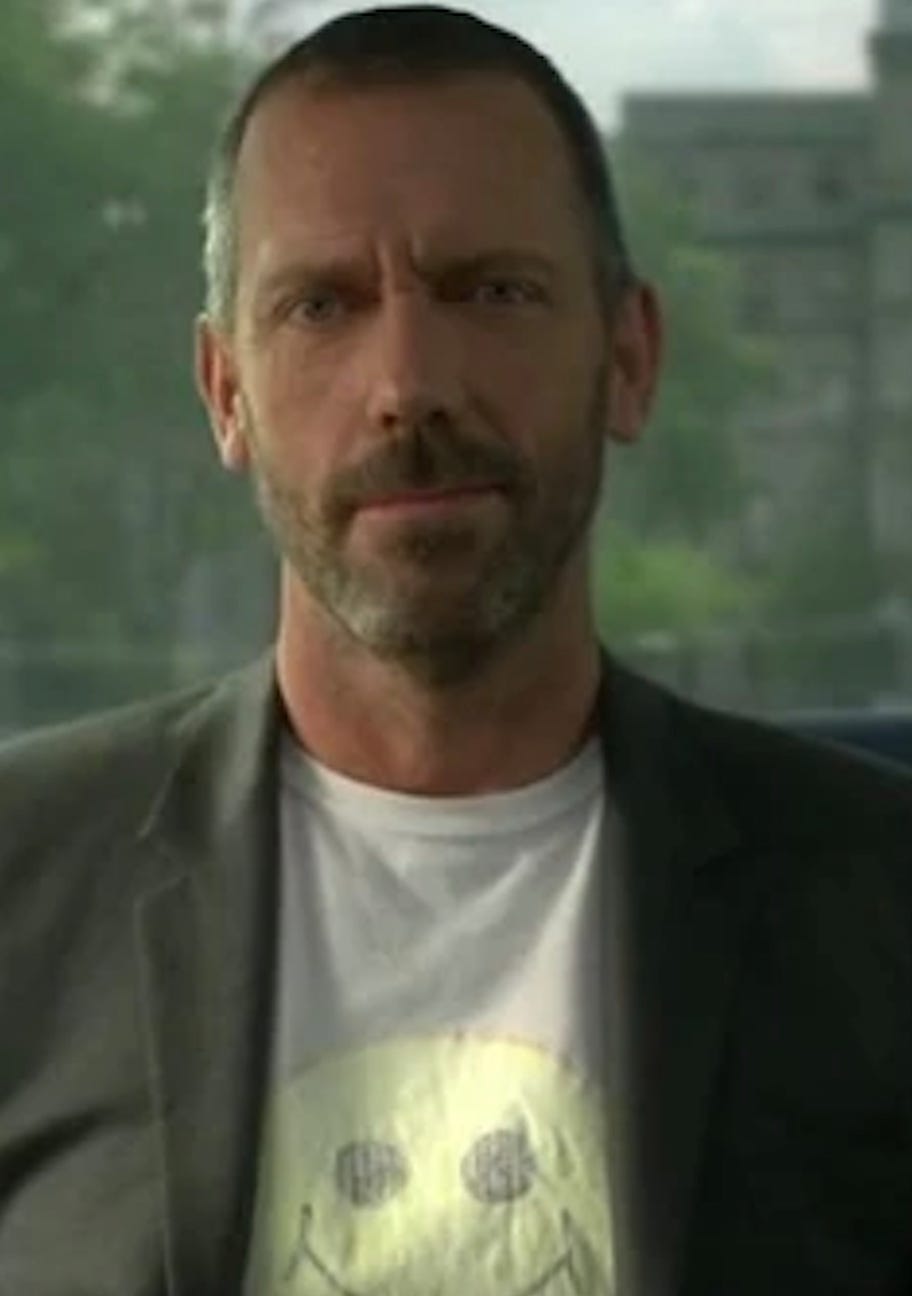
House is the perfect example of a man hell-bent on going down with the ship or burning down the house altogether. Perhaps he resonates with us as men, because he handles so much of his pain in ways we relate to — while also masking his pain with humor.
LOOKING FOR CLUES
We are looking for clues in psychotherapy that may be behind someone’s suffering. Clues sometimes can be described as symptoms, like if you are having trouble sleeping if you are using something to alter your mood if you are ruminating, or not feeling pleasure in things you do.
Clues often mean some level of vulnerability or self-awareness that comes over time, and with trust. This does not all come at once, it takes time.
It is difficult to simply tell a man to trust in the process and be vulnerable when there are many generations that have helped put that armored facade in place — but as a culture, we need to reduce the stigma and shame so that men can be authentically themselves, authentically flawed and vulnerable like all humans are instead of believing in the one size fits all approach to being a man.
 Follow Your Myth
