My interest as a Depth psychotherapist is studying where myth and fairy tale imagery bubbles up to the surface touching our waking world, and exerting its influence on our individual and collective psyches.
At least two expressions of this I came across recently declared that romantic love is dead, never existed, or is unsustainable. In this article, I want to explore the recent musings by Pamela Anderson, in her Netflix documentary, Pamela, A Love Story.

Anderson would seem to make some fair points and opens up the subject of romantic love for discussion. She spoke of her experience to millions of viewers, which means what she said may have resonated with a good number of people. This makes it a good jump-off point for the topic of romantic love.

EXPECTATIONS OF ROMANTIC LOVE
Some of what Anderson is talking about centers around the expectations we have for romantic love. The expectation seems to be, we fall in love, and we stay in this blissful romantic state — perhaps because that’s what myth and fairy tales tell us. Anything less than that dream means the dream is altogether flawed, and therefore romantic love must not exist and is not possible.
Another way to understand this may be, if we cannot stay in that blissful state then it was not romantic love — and therefore it’s not love —or even it’s the wrong person.
In other words, romantic love should always be easy.
I have seen this understanding repeated by others, and this puts the emphasis on either finding the “perfect” partner or the opposite, believing that romantic love is impossible altogether.
There are many reasons for romantic love to fail of course. For instance, two people may believe in romantic love, but not share the same concept of romantic love. It is possible that a couple may begin in romantic love, and then fail to evolve that romantic love and in doing so fail to keep that flame alive. It is possible of course that what was perceived as romantic love was a projection altogether and once the veneer is shattered there is nothing to support it.
This may happen for a number of reasons, all too complex to get into deeply in a short article, suffice it to say that Pamela hints at her own beliefs about romantic love and where some of her miscalibrations stem from. We don’t know enough about where Tommy’s influence comes from, but we could speculate from clues filtered throughout their relationship and even his other relationships.
AMPLIFICATION AND TAKEAWAYS
Some of what I’ve read and seen online mischaracterizes the work of people who write about myth, fairy tales, and psychology like Robert A. Johnson. However I felt encouraged and even amazed to hear Pamela Anderson quote Robert Johnson on Netflix, but it is also misleading in a number of ways which I’ll get to.
In terms of what I have written about fairy tales, her interview amplifiespreconceived ideas using a sound bite, and no further exploration. We do not hear the voice of a narrator like Werner Herzog chime in with his husky pooh bear voice saying, “…but was Pamela correct when she quoted Robert Johnson the noted Jungian analyst? Perhaps Robert Johnson did not actually experience sustained romantic love, and this sullied his interpretation of love. “
But, we are not interrupted by a thoughtful reflection that may challenge the idea, because this is not that type of documentary.
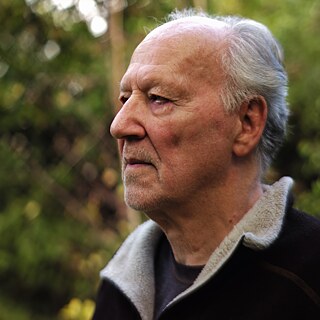
This is something I track in fairy tales, how stories and the voice of a narrator may amplify what they think the takeaway should be for the audience. In this case, the narrator appears to be Pamela, but there are editors and producers, and others behind the scenes who amplify what they wish to be the message.
Robert A. Johnson amplified fairy tales with his own prejudices as well as his wisdom.
Amplification of ideas is important because those that write articles or create television shows and even documentaries get to tell us what the message is, and what the takeaway is.
I study how fairy tale writers have amplified ideas over hundreds of years, to sell a message — the takeaway they wish to sell — for example, that women must be virtuous, and what virtuous even means. They amplified the happy ending and the romantic coupling as they understood it in various time periods.
Importantly, these amplifications influence many even if unconsciously, they have become part of our collective psyche. They have become part of our value system, and are often used in daily life as a metric for measuring where we are in life.
It was a cinderella story, a fairy tale wedding, or a slaying of dragons.
The message being amplified here is that some of us believe in romantic love like Pamela Anderson, but that it is unsustainable. It’s no one’s fault, it certainly wasn’t Pamela’s or Tommy’s fault, it just does not exist. That’s the message.
Maybe we can challenge this idea though just before it sinks too deeply into the collective unconscious.
Robert A. Johnson.
When a writer like Robert A. Johnson or Joseph Campbell is taken as gospel truth, is when I take note. I very much appreciate the wisdom and writing of Johnson and Campbell, even when I disagree with them. Polar opposites in writing style, Johnson is concise and easy to read — he had a gift for distilling the far heavier work of Carl Jung.
Joseph Campbell is the opposite, he is esoteric and rambling taking 50 pages to make a point, while he jumps from one myth to another and finally — if you can hang in until the end of the chapter, he wraps it up.
I believe it is important to read with a critical eye and to sometimes question those like Johnson and Campbell who we may put on a pedestal.
However, it is equally important that we do not misinterpret what Robert A. Johnson may mean. It is important to understand we don’t know everything that influenced his words or his life. Now some may think you shouldn’t know those things, we may assume he is speaking objectively — but is he?
Can any of us be truly objective?
PAMELA ANDERSON ON ROMANTIC LOVE
I want to question the way some of these thoughts are repackaged and remembered. Here is what Pamela Anderson said about romantic love in, Pamela, A Love Story;
Robert A. Johnson says Romantic love is not sustainable. As soon as I read that I was like, Ugh. This is the worst thing I’ve ever read.
“It’s so disappointing” she continues, “Why can’t we live a romantic life every day?”
Anderson is referring to Johnson’s writing about his archetypal understanding of romantic love in books like We: Understanding the Psychology of Romantic Love, and he speaks of it in other places such as in his memoir, Balancing Heaven and Earth: A Memoir.
In this he writes;
The desire to live out one’s religious life through someone else is probably the most common form this projection takes in Westernized society; we glorify it as romantic love. In romantic love, we briefly put all our gold onto someone else, and of course, the projection cannot hold up. The overwhelming joy and beauty that we experience when we first fall in love diminishes fairly quickly and often leaves us disillusioned. Instead of seeing that the problem is our projection, we blame the other person.
Johnson is writing about our individual need for spiritual growth and recognizing a part of ourselves in another.
Johnson then continues:
“relationships generally begin with this type of projection, but to be maintained they must evolve into a sustainable human love. The projection of the inner gold must be gradually taken back.”
This is what Pamela Anderson may be referencing, she says he said unsustainable, but here at least, he says;
“They must evolve into a sustainable human love.”
This is a far less grim expression of what Anderson refers to, and it may point to where she becomes lost in the experience and where her disappointment is. However, Anderson is correct that Johnson implied in his writing that romantic love was secondary to spiritual work though — this is part of Johnson’s amplification.
Anderson caught the gist but missed when he was saying it must evolve and mature.
The reality is that Pamela and Tommy could have evolved into the next phase of their relationship together which could have been very romantic but also more realistic. They could have shared love, and they could have shared responsibility for raising their children together. This may challenge what romantic love looks like, but romantic love, in general, is ill-defined even in fairy tales that end with the prince and princess riding off in a carriage. Will they co-parent? Will they co-sleep with their baby?
Instead, Pamela finds violence when she pleads for help and she quickly calls the police, her romance doesn’t diminish, it is shattered. This action likely reinforced for her that romantic love is unsustainable.
At that moment we can see that she is caught in her own complex of what romantic love looks like, and he is caught in his own complex of what he believes his part in a relationship should be. For him, it seems to be along the lines of receiving adoration and never being challenged.
ROMANTIC LOVE IS MESSY AND BEAUTIFUL
This points back to what I said earlier, two people may have different concepts of romantic love. To evolve into something sustainable there must be growth, and this is because we humans are just that — real and human. There are bills, and late nights walking teething babies. There are late-night drives through the streets of cities when you realize the last diaper is gone. There are toilet seats left up, and bills to pay. There is a leak in the ceiling and garbage that needs to go out. There is less time for each other as responsibility grows and unforeseen issues come up.
It is messy and beautiful — and that can also be romantic love.
I don’t want people to think that is my definition of romantic love, but it is part of romantic love. Romantic love starts in a state of bliss that is about “us” but becomes static and unsatisfying if there is no growth together in some way, and that can be challenging at times — but it doesn’t negate romantic love.
What negates romantic love is the belief that it should always be elegant and simple.
Romantic love though also takes some investment of time. At the beginning of a relationship, it is easier to invest ourselves in the romantic parts. Over time we need to find ways to renew our connection and even our own personal connection to that spark. It is nurturing that romantic place in ourselves, and between us as a couple and attending to the challenges that can allow a couple to evolve together.
Part of this depends on how you define romantic love. In this case, without going too deep, I am implying that when a couple is challenged by life, and challenged by being in a relationship they can grow together. Perhaps it isn’t about taking back the inner gold but finding our gold in a relationship with others.
After all, it is hard to find any gold — if we live a life of complacency with no digging, no discomfort, and nothing to challenge us.
If anything those people I find most stuck in life, never challenge themselves by being (and staying) in a relationship.
Within that, it can still be romantic love. We believe it is unsustainable if we can only see up to the gate of the fairy tale castle, and watch the prince and princess go inside together. If we can imagine real life inside those walls then we may begin to understand what sustainable romantic love can be. We each get to imagine what life might look like inside the walls of our castle though — and we get to invent what it looks like together.
If Robert Johnson is to be understood then it isn’t just that we project the soul work into the other person in our lives, but that we can only grow spiritually when we are in a relationship with others in this life.
Johnson also wrote;
The path is never straight and neat inside oneself as if you could go to a library and do all your inner work there. Instead, when something is ready to move from the unconscious to the conscious, it needs a host or intermediary. Generally, this intermediary is some person or thing.
In the case of Pamela and Tommy, we can see the projection of what the other must need. He had clear projections of what he believed he was entitled to, and that was a picture-perfect fairy tale princess bride. He didn’t want to be challenged by that bride. For her, she clearly had an idea of the picture-perfect prince and gravitated toward that internal image over and over again.
For Pamela though this is where Johnson rings true. He writes;
If it’s your gold — your soul — that is coming to consciousness, your first inkling of such a deep internal change will likely be that someone else begins to glow for you. It is your gold, but you see it in someone else; you are putting the alchemical gold on that person.
I tend to think of this not as seeing your gold in someone, but maybe it is more of a reflection of something you need to work on. If on the way you uncover a nugget of gold then good for you. This is where we might find a clue to what Pamela sees in these unreliable men. It is something unresolved in her, and many of us have this unresolved something that makes us look for sustainable romantic love in the wrong place, with the wrong person.
Pamela would benefit by trying to understand where her projection goes wrong. She could learn to identify the traits she looks for, and the warning signs in these romantic partners, and try to understand something her own unconscious is trying to have her grapple with. She can ask herself questions like, “Do I believe in romantic love?” and “Why do I keep choosing men who are not emotionally available?”
In this case, it may not be that she is identifying the gold, but avoiding a lump of coal mistaken for gold. In examining her choices she (and we in our own lives) can eliminate the wrong person and move towards a sustainable romantic love.
To put it simply, if Pamela is drawn to the brash self-confident men hoping to get an emotional connection that she never received from her dad, then she is repeating a pattern that is not serving her and needs to identify what drives her choices in men.
This isn’t just about Pamela though, by trying to look at Pamela’s fairy tale — and what she has shared with us, we get to look at ourselves. She portrays a fairy tale story that is not over yet.
Most importantly it is not proof that romantic love is unsustainable. Looking at this story can tell us more about our own lives, for who has not made a terrible choice, or been lost in a projection at some point?
The life task is to keep looking for gold, but learn to identify the coal.
LAST NOTE ABOUT ROBERT JOHNSON

Perhaps we like to think of our heroes as flawless and even look to people too much as gurus, rather than as the flawed humans we are. A psychotherapist is another flawed human.
This is not to take anything away from the remarkable life work of Robert A. Johnson. I believe he offers a wealth of knowledge and insight in his writing, but this does not mean his own personal experience does not shadow some of what he says.
However, very early on in Johnson’s career, he recounts the story that Carl Jung told him he would spend his life alone and not marry. He told him his life work would be his spiritual work.
I am not an expert on Robert A. Johnson, but from what I can tell he did indeed spend his life alone going between an ascetic spiritual life — to one being a Jungian analyst, and writing books on Jungian and depth psychology.
Should we be taking the final word on romantic love from someone who may never have experienced lasting romantic love? Is it possible that his interpretation was a salve for his own lack of lasting romantic love?
We may never know for sure — but we can look for clues.
Robert A. Johnson does not dedicate a book to a wife or children. He does not speak of them in his books, because as far as I can find, they did not exist. Indeed the obituary from 2018 of Robert Johnson reads;
Mr. Johnson is survived by his timeless books, millions of inspired and heartened readers, and friends from all corners of the globe.
Johnson’s own life was about spiritual evolution and finding the gold within himself and others, but it is possible there was another side of life that Johnson did not experience, and we can only speculate why that is — and what inner gold was lost if he indeed, did not share a sustained romantic love in his journey through this life.
https://www.legacy.com/us/obituaries/sandiegouniontribune/name/robert-johnson-obituary?id=9147426
#romanticlove #jungianpsychology #psychotherapy #followyourmyth
 Follow Your Myth
One thought on “MYTHS OF ROMANTIC LOVE: The Fairy Tale of Pamela and Tommy”