American writer Louise DeSalvo writes about the connection between caring and grief in her book, Writing as a Way of Healing where she explores the origin of the word care, writing:
May Sarton… described how in reading Henri J.M. Nouwen’s book of sermons, Out of Solitude, she learned that the word care has its roots in the Gothic word Kara, meaning “lament.” The “basic meaning of care,” then Sarton notes is “to grieve, to experience sorrow, to cry out with.”
When we think of the transitional time for our children who may be passing that threshold into adulthood I think of this connection between grief and caring and additionally how it’s entwined with the word individuation.
Jungian analyst Marie Louise von Franz in Animus and Anima in Fairy Tales (2002) defined individuation as the following:
“becoming conscious of who you were meant to be.”
This seems simple but it is also intertwined again, with stepping across a threshold into your own life. Implied within this is also stepping away (to some extent) from your family of origin.
DeSalvo reminded us of Sarton and Nouwen who took note of the word care. They reminded us that in our language we sometimes have words with dual meanings that are intertwined, and sometimes opposing.
A word may encapsulate a meaning we know and a shadow side of a word that we may sense unconsciously. These meanings are intertwined in our psyche. Thus, care is intertwined with grief and sorrow because to care for someone means that there will eventually be a loss somewhere. It acknowledges the grief that is present even at the beginning, and in some respects, we can track all through life’s changes.
DEJA-VU & PROLEPSIS
There is another word that suggests a knowing of something that is hard to explain. The word deja-vu expresses something that feels familiar like we’ve experienced this moment before.
I want to suggest that there is another type of knowing that is similar to deja-vu which may be an unconscious experience of being in two places or at least two states of mind simultaneously.
Plato used the word Anemnesis to express a knowing of information, but this Greek word means, “a calling to mind” and does not capture what I’m trying to express which is more about a feeling as if projected from our future mind.
Perhaps the word is closer to the Greek prolepsis which suggests “foreknowledge.”
Prolepsis: The representation or assumption of a future act or development as if presently existing or accomplished.
These are imperfect words to express a state of mind or an emotional state that I believe we humans can inhabit. We can cry when we are happy. We can feel loss at an important time for our children, like when they graduate from high school or college.
When our children individuate, we can be happy for them as they step into their lives, and still feel our own loss.
TWO MINDS: PROEMNESIS
I’ll offer up a new word that perhaps should exist, proemnesis which feels closer to the right word, it implies recalling something from the future. It has the feel of a word that encapsulates an emotional state rather than an intellectual thinking state.
Proemnesis: The experience of recalling something from a projected future emotional or mental state.
I have had these intermingled moments in my life of proemnesis, where I am of two minds. Here is an example:
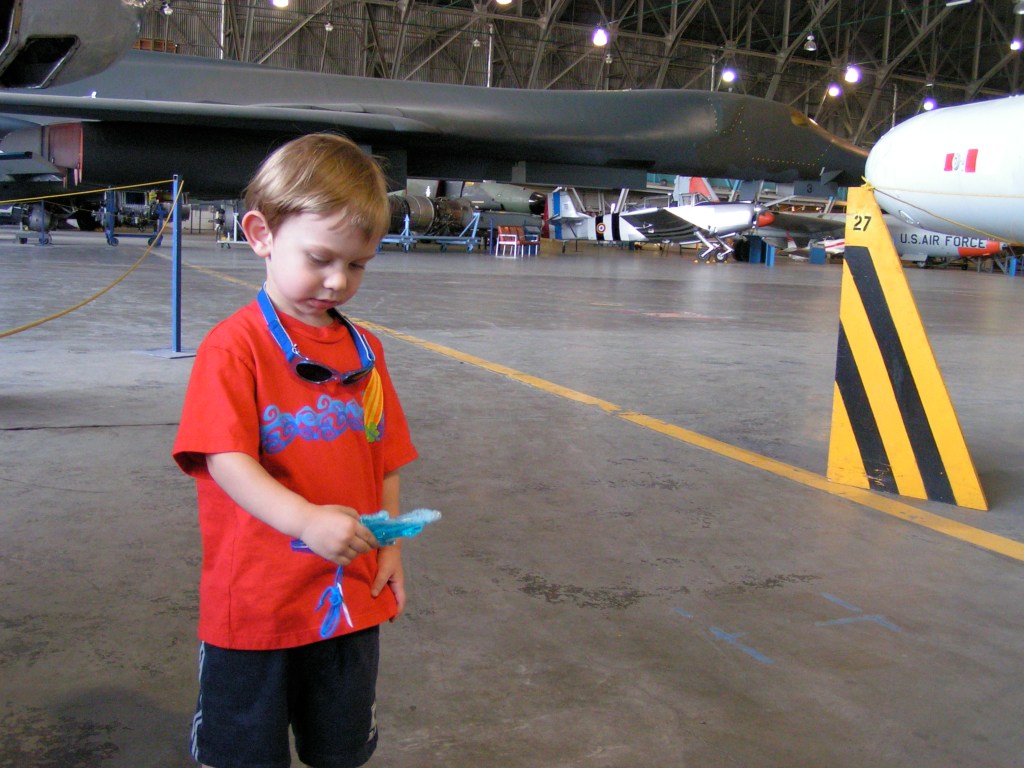
I am sitting with my four-year-old son as he runs circles at the airplane museum in Denver. I suddenly felt as though my future self was present from 14 years into the future, observing us. It is a deja-vu-like feeling.
In that moment I am of two minds, and I try to soak in that fleeting moment.
Time slows as I take in the muffled sounds of the vast airplane hangar we are in. My eyes trace the shapes of the various airplanes, one from the cold war, another bigger from WW2. I am drawn to the sound of my son’s sneakered feet slapping the concrete floor as he runs. He makes airplane zooming noises swooping a small P51-Mustang through the air.
And I feel the dual nature of this moment, feeling the joy intermingled with this quiet moment, that is suddenly tinged with grief from this future self that is present.
The brief moment vanishes as we get up to move through the museum and read placards we’ve read dozens of times already.
Yet here I am actually 14 years later remembering the details of that moment and feeling the dual nature, the two minds. The moments and feelings are intermingled as I approach his high school graduation in a couple of weeks. He is 18 and now an actual pilot on his way to NROTC and college, with the goal of becoming a Naval aviator.
From this side of the memory, I feel myself reaching out to that moment and remembering the experience of being of two minds.
INTERTWINED IN TIME
To care deeply about someone is intertwined with lamenting and grief as if that word embodies our future feelings.
Put simply, we cannot grieve for something we don’t care about. We grieve these life transitions, even while we celebrate something joyful. We may not be aware of this grief consciously, but the more we can acknowledge that the hard parts are there, then the easier it may make it to move forward instead of stuffing those feelings.
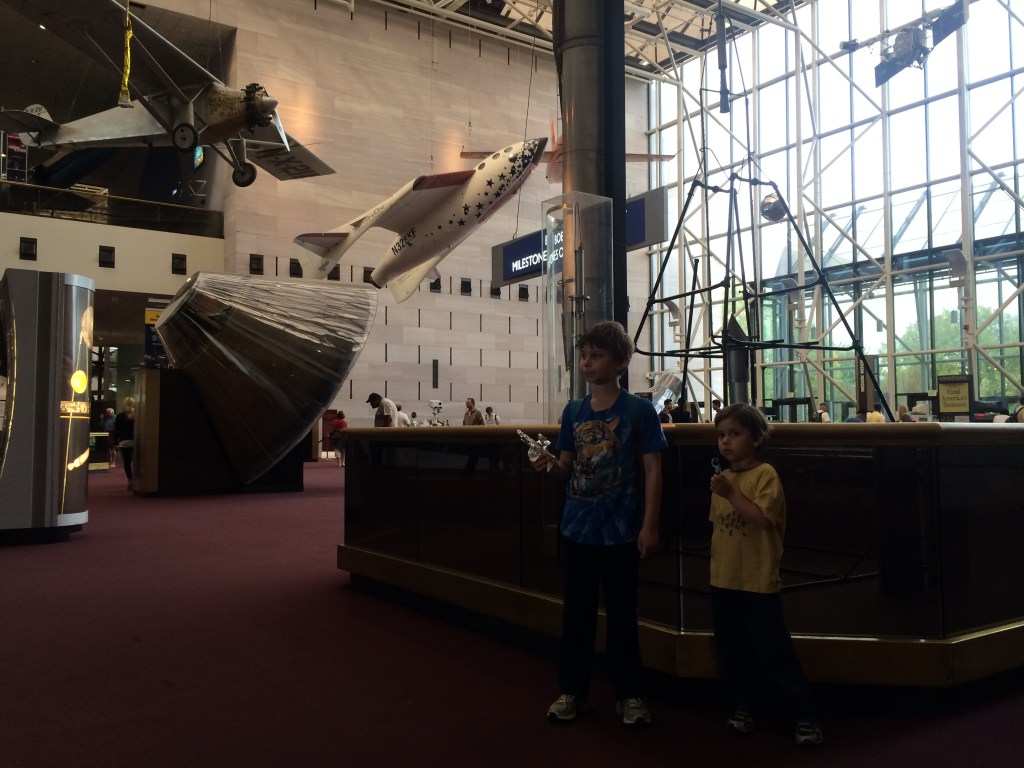
It can also be hard for those who move out into the world and experience the weight of being on their own, which sometimes becomes intermingled with harder feelings and loss of motivation.
There is a celebration as someone moves across that threshold into something more, and there is loss tied up in that too, as we realize our lives have inexplicably changed in that moment as has theirs. For all of us who care for someone it is as if we live in two places simultaneously, we are in the present but aware of this future self and the inevitable loss.
LIFE TRANSITIONS
Jungian psychology is interested in life transitions, and how each life transition is related to individuation. This is not something we simply go through once, but in my mind, it is something that we continually experience in life.

An initial individuation for someone reaching adulthood is that process when one steps into themselves and their life, and this may mean separating in varying degrees — from our family of origin. Our children become independent and find their footing as individuals, rather than as a collective, or as someone who represents the family. They form their own opinions and have their own goals and dreams they follow.
This does not mean we aren’t connected to our family of origin, but there is a marked transition that occurs. When we fail to step into our lives it can undermine our independence and our mental health in ways that we tend to carry with us. If as parents, we try to prevent our children from individuating then it may equally do damage to them and ourselves.
THAT WHICH IS BITTERSWEET
This has been an imperfect article for me because it traipses into places I don’t often like to go, which is self-disclosure. When I do it takes more time to decide how much I want to share.
I felt though that in order to talk about grief, means for someone to feel some of what I am talking about through an example that may help tease out confusing emotions that we sometimes find ourselves within.
We share these words which go back thousands of years and thus imply a universal way of communicating something, which in this case is an intertwining of caring and grief. These are my thoughts about perhaps a bigger way our psyches are tracking these experiences, not from one place in time, but rather from many points in the timeline of our lives. This may be somewhat outside of a linear way of thinking and yet emotionally I believe that it may be something that resonates.
The takeaway is that with all the joy in life comes the eventual loss, it makes for a bittersweet moment and that is a phase I believe we are all familiar with.
#individuation #jungianpsychology #psychotherapy #followyourmyth
 Follow Your Myth