An audio version of this article is below, if you would like to listen instead.
As we are approaching Father’s Day, I wanted to write another series of articles about fathers and in particular father-son relationships. This article will explore the film Field of Dreams, (1989) with Kevin Costner as Ray,James Earl Jones as Terence Mann, Ray Liotta as Shoeless Joe Jackson, and Amy Madigan as Annie.

In this film we find ourselves within another fairy tale, and although it does not start “Once upon a time” like Joe versus the Volcano does, it announces itself in more subtle ways that we are in the realm of the unconscious, the dreams, myth and fairy-tales.
I wrote about Joe versus the Volcano and the father-son relationships in this article last year:
Field of Dreams has some parallels to films like The Wizard of Oz, which wasreleased 50 years earlier in (1939). We begin in a corn field, on the great plains of the United States for instance. Although the Wizard of Oz begins in black and white before we enter into unconscious realms, we can consider that Ray’s life as a farmer is feeling colorless, it is lacking something that he has not admitted until now. There is no cyclone that comes tearing through to announce the transition to the unconscious realms, there is no abrupt shift to color that lands us in the unconscious. Instead , there is a gradual drilling down into the unconscious territory that begins with a voice in a field that only Ray hears.
The voice tells Ray:
“If you build it, he will come.”
We can consider how this beginning aligns with Joseph Campbell’s ideas on mythology. At this moment Ray receives the call to adventure, the first stage of the mythological journey which according to Campbell, “Signifies that destiny has summoned the hero.”
The question though is whether destiny is calling Ray, or is something else happening here?
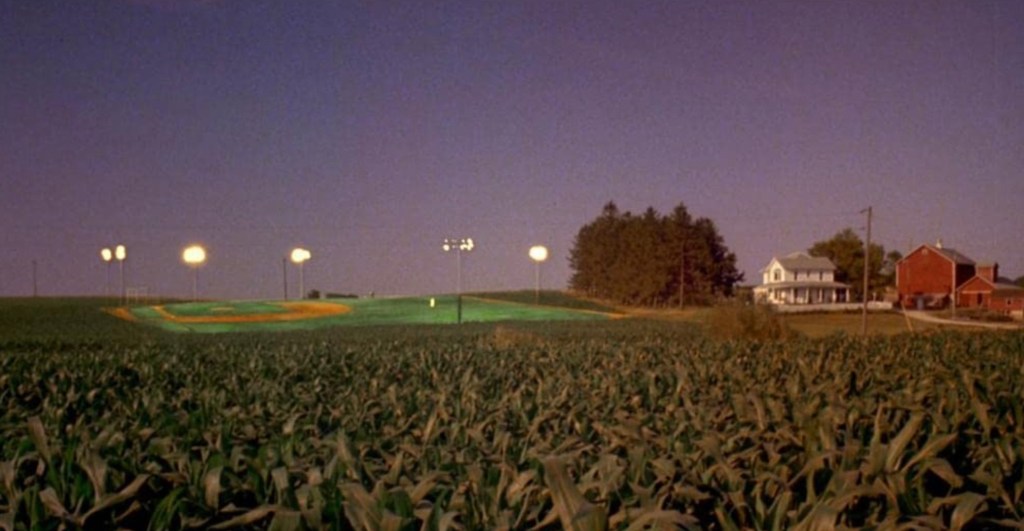
The idea that destiny must come calling before we heed the unconscious need to go deep and hear the call to adventure feels like too pat an answer, and one that means always waiting for the obvious signs. The unconscious is not always obvious and although for Ray it is more subtle than Dorothy’s somewhat psychedelic journey into the unconscious, it quickly gains momentum and gravitas.
What is important is that Ray engages with his unconscious and literally envisions a baseball field, and this is when he knows what the voice wants him to do. Ray makes that vision a reality.
CALL TO ADVENTURE
Campbell writes about the refusal of the call, which in some ways is part of the theme of this film. Ray says about his dad:
”He must’ve had dreams, but he never did anything about them.”
Ray is expressing the observation that his dad refused the call to adventure in his own life and that from Ray’s perspective he “never did a spontaneous thing.” In observing this Ray is indicating that perhaps he should take the other path and heed the call to adventure. He explains to his wife Annie (Amy Madigan) that he needs to do this thing and mow down part of their farm to build a baseball field. The thought seems mad to Annie, but she acquiesces and shows uncommon support for his inner journey.
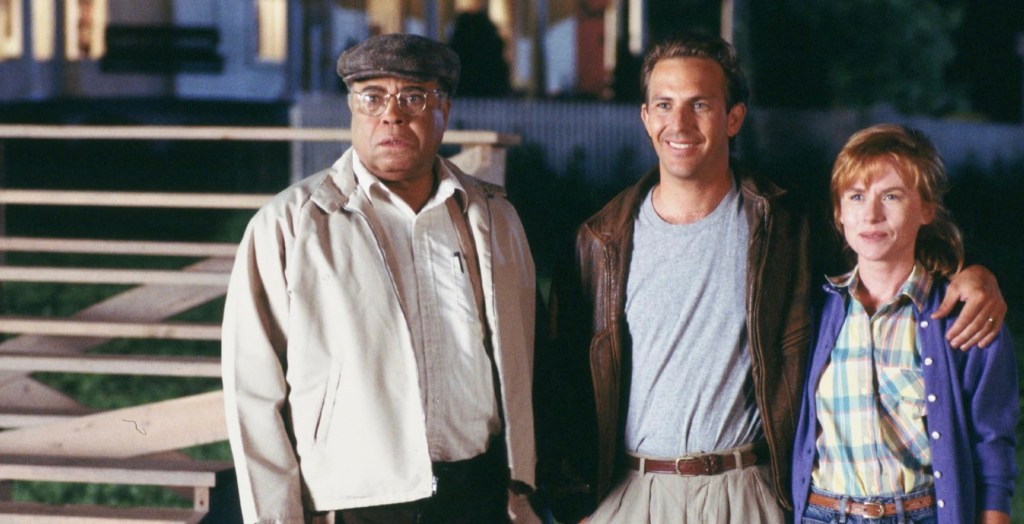
Before this though Ray explains through narration a little about his dad whose dream of being a baseball player didn’t materialize as he had hoped and what his life became like. Ray tells us:
I never forgave him for getting old. By the time he was as old as I am now, he was ancient.
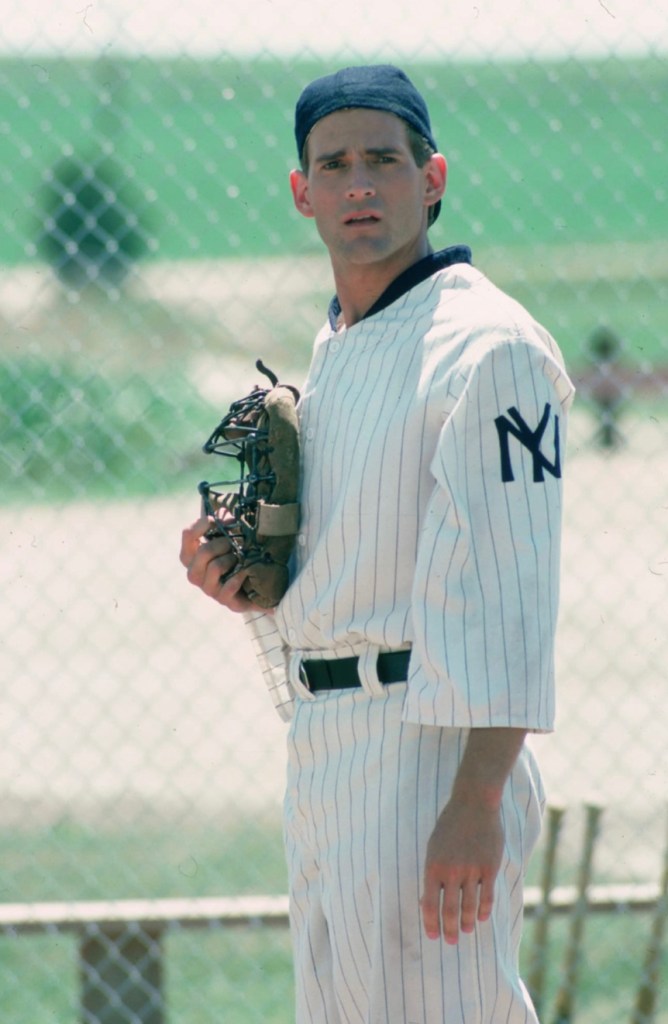
This film has become the quintessential father/son film that explores the complex and often painful parts of a father/son relationship. It explores themes around disappointment in life, and dreams that do not come to fruition. It explores what happens when a father shifts from being his son’s hero to just a flawed human. It explores what it means to be a son who is disappointed as a teen and comes to regret his harsh words that he never took back.
What does it look like when someone feels crushed down by life? What happened to those men whose dreams passed by?
For some like Doc “Moonlight” Graham (Burt Lancaster in his final film) he went on to have a rich life as a doctor, but for others like Ray’s dad he first lost his wife who died when Ray was only 3. It is a point that hints at trauma but never scratches beneath that surface.
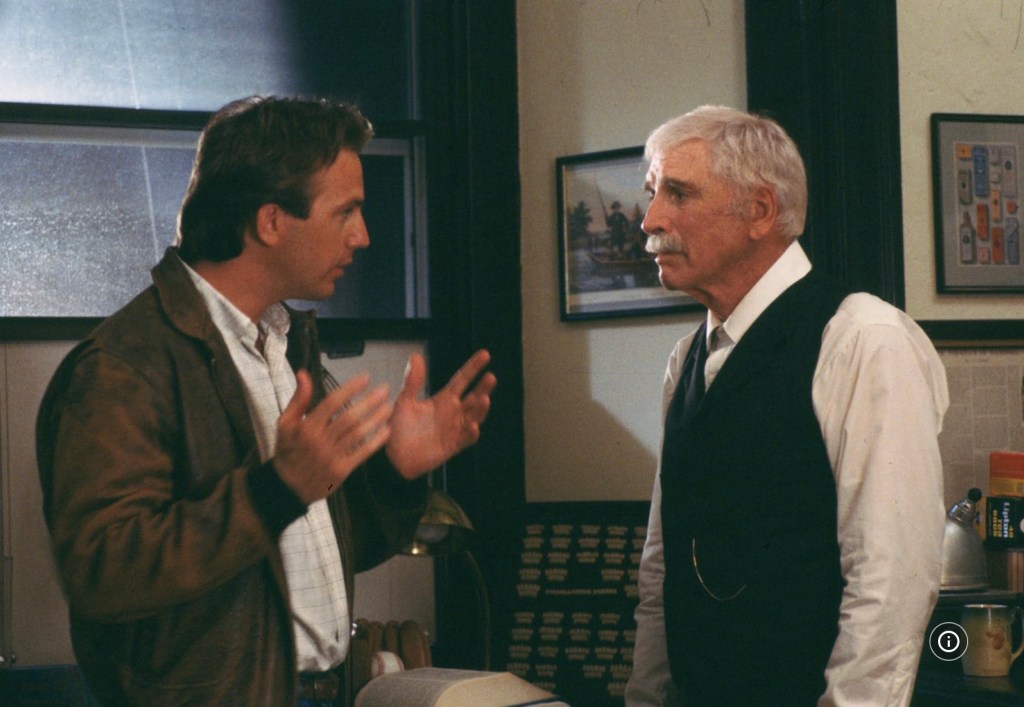
In effect what Ray is telling us is that he didn’t just reject his dad’s ideas of life but it was also too hard to see his dad growing old and washed up, and he rejected this eventual loss by running away. Perhaps we see that losing his mom when he was 3 and watching his dad be ground up when he was 17, was just too much loss for Ray.
I have had some of these same themes in my own life. I too watched my dad’s dreams get crushed down when he had a stroke at 49, and perhaps in some ways I too didn’t forgive him for getting old, or for what I perceived as giving up.
THE FISHER KING
In some ways this film echoes a past theme I wrote about last year (2022), Ray in many ways is Perceval seeking a way to heal the wounded Fisher King (his father) by finding the grail.
I wrote about the father wound in two articles based on the Robin Williams film, The Fisher King here:
After Ray leaves home as a 17 year old, he gradually comes to regret the loss he feels and losing his connection to his dad. To Ray’s young mind, he couldn’t forgive his dad for getting “old.” He couldn’t forgive his dad for being human and for the eventual loss he would feel, and this plants the seed for the baseball field and reclaiming some of his past — to heal the past, and his connection to his dad.
In therapeutic terms there may have been something healing just in building this field for his dad John Kinsella, even if the ghost of Shoeless Joe Jackson never came to play ball in the field.
In the case of this film as a fairy tale, Ray has an actual chance to redeem his past life mistakes. His journey is a metaphor for us experiencing his catharsis as an audience, but as experienced by himself the healing becomes outward real manifestations, that extends to those around him like Terence Mann, Shoeless Joe and the others.
Ray himself said something cruel to his father before he left home at 17 and never returned — and he has lived with that regret. Terence Mann (James Earl Jones) asks Ray why he said it and his response is simply, “I was 17. I never got a chance to take it back.”
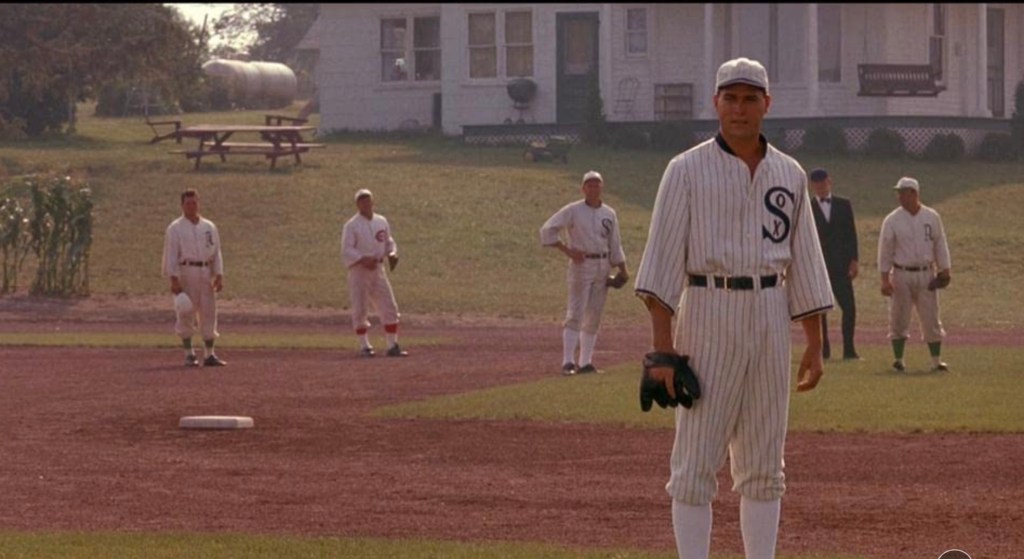
This relationship between Ray and his father is also embodied by his dad’s hope that his son will become the baseball player he had hoped to be, but at 14 Ray refuses to play catch with his dad and his individuation begins. Although we can understand that part of Ray’s journey is to individuate from his dad, we can also understand that in some ways Ray was pulling away perhaps because as he said, he couldn’t cope with his dad getting old, and losing his way in life.
Perhaps Ray also understood that he was being asked to fulfill his dad’s dreams, and it was a weight he could not bear to carry.
There are many great storylines in this film, and the film still resonates emotionally over the years. In effect, we can feel that it is a story about regret and lost time, and a fantasy to heal old wounds with family.
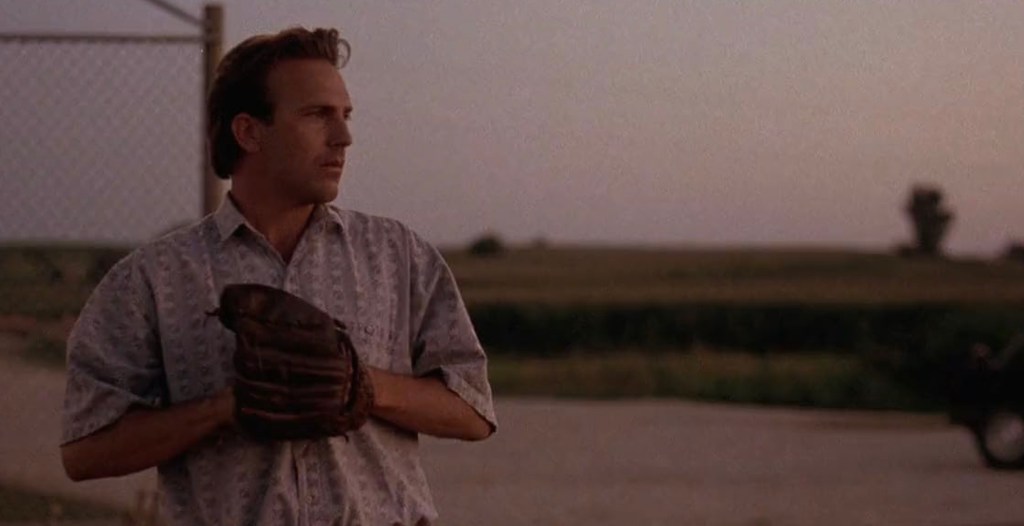
IT WAS YOU / YOU ALWAYS HAD THE POWER
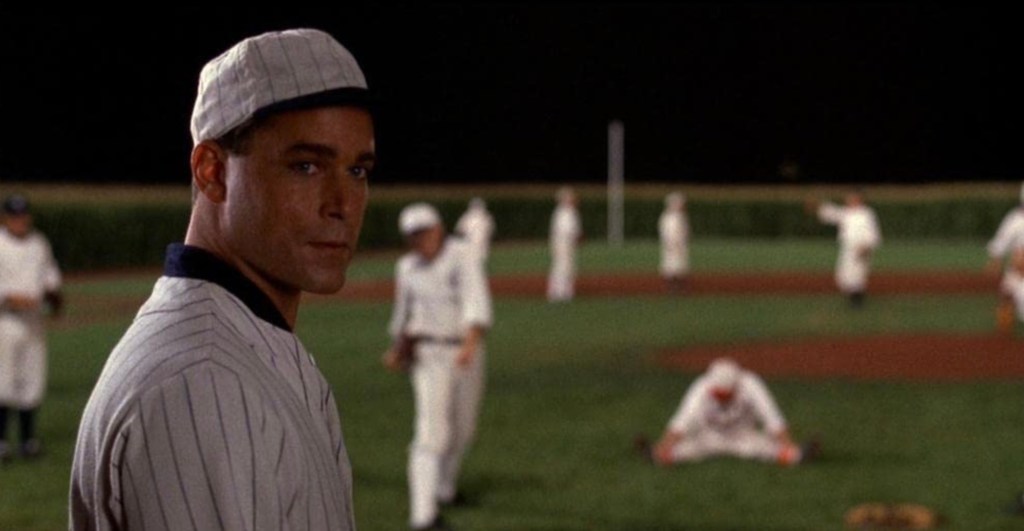
Perhaps one of the most poignant parts of the film is when Kevin Costner as Ray says to Shoeless Joe Jackson (Ray Liotta), “It was you, you were the voice in the field.” It is a statement rejected by Shoeless Joe who simply replies:
“No Ray, it was you.”
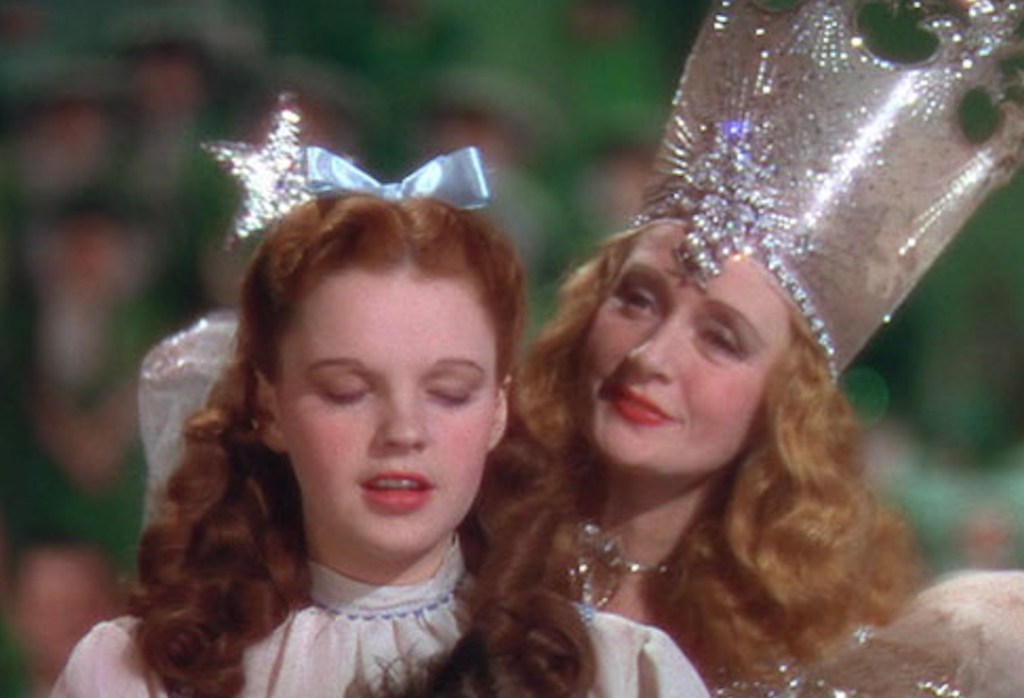
This idea — that the power to change one’s life and call in the hero’s journey is not new to Field of Dreams. Again, we can simply look to The Wizard of Oz, to see this theme. At the end of the film, Glinda tells Dorothy who has been on her own odyssey, that she could have gone home already.
Dorothy says, “Will you help me, can you help me?”
Glinda replies, “You don’t need help any longer, you always had the power to go back to Kansas.”
The metaphor in these films is that the call to adventure may seem as though it comes from outside of oneself, but it comes from within. We are within the realm of the unconscious, and the call Ray hears is not from an abstract destiny, it is from within himself.
Ray listens to that voice and follows and lets the adventure play out. The act of being spontaneous that Ray says his father lacks, is just that — to act from the unconscious, without over thinking something.
Spontaneous: Performed or occurring as a result of sudden inner impulse or inclination and without premeditation or external stimulus.
These films are metaphors for that which we lack and need to find out in the world, but both films find that the thing one needs, is carried inside already.
True to life though, these life lessons are hard-won. As humans we self-destruct, we lose momentum in our dreams, we fall victim to self-doubt, self-criticism, and perfectionism. We may fall victim to the daily grind of life, and as we get older we may carry the weight of regret and loss.
For Ray the pain he carries about his failures in his life circles around one thing, his father. He carries the pain of knowing he messed up greatly and has no way of taking it back. Unconsciously he wishes to “ease his pain.”
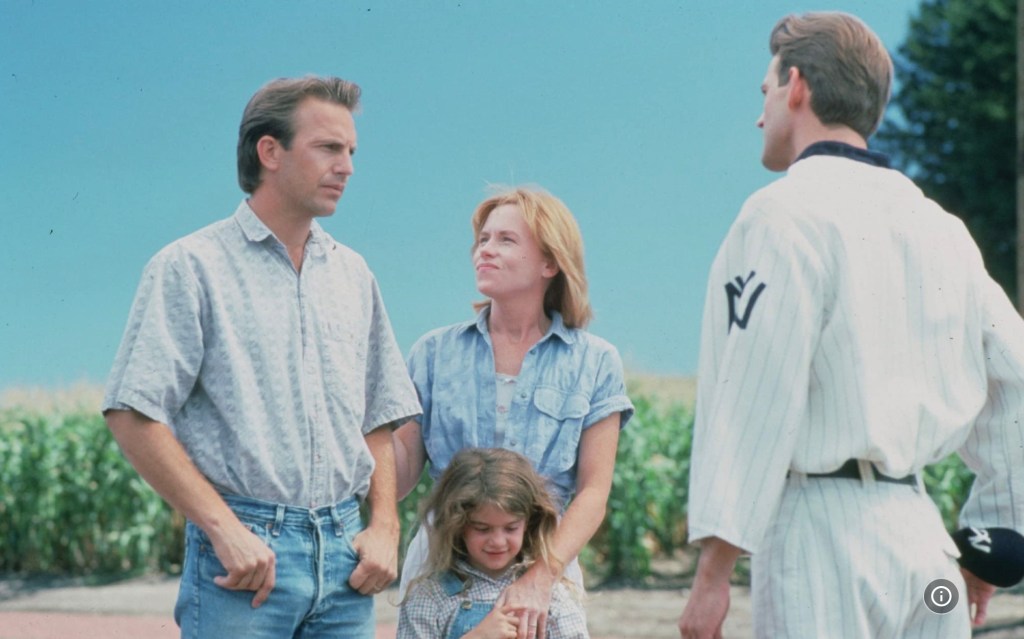
Annie, Ray’s wife, repeats the phrases Ray has been hearing all along. “He will come” and “ease his pain.”
Suddenly this all makes sense as Ray looks across the in-field and sees his father as a young man putting his equipment away. In this very easy-to-choke-up moment in the film, those of us who in this life feel loss and life regrets that may be similar to Ray’s in some way may feel that pain.
This is when cinema can connect with something inside the audience that feels true and authentic, despite the fact that the story unfolding before us is told in mythical and fairy-tale terms.
At the beginning of this article, I wrote that Joseph Campbell said the call to adventure, “Signifies that destiny has summoned the hero.” I questioned whether this was completely true. Destiny implies that this call to adventure came from outside of the hero of the story, but my takeaway is simply that when the call to adventure comes, it may come from within.
#Individuation #jungianpsychology #psychotherapy #followyourmyth #fathersday #fatherwound #fatherson

