This week I am writing another article on the value of journaling and doing other forms of self-work such as artwork as part of our own internal journey.
At a time when our country and world may feel torn apart by disagreements it is important to not simply jump into the fray of disagreements, but to once again turn inward first before responding (if at all). One thing that I observe for people is that there is a trauma response when we feel unseen and afraid, which can turn into anger that may make things worse. It may make it worse personally if it triggers those trauma responses and the hurt parts of ourselves — that are unresolved.
REDUCING VALVE OF CONSCIOUSNESS
Aldous Huxley in his 1954 book, The Doors of Perception, expanded on the idea of the “reducing valve” that we have in our brains that limits our conscious perception of the world. Huxley explored this concept through his personal experience with the psychedelic compound mescaline, which he believed temporarily disabled this filter, allowing access to a broader and more profound reality. Similarly, Carl Jung delved into expanded states of consciousness without the use of psychedelics in his personal writings, later published as The Red Book. In this work Jung explores his connection to the collective unconscious and archetypal symbols, revealing profound insights into the deeper layers of the psyche.

While Huxley and Jung approached consciousness expansion in different ways, both recognized that perception is shaped by internal mechanisms. As humans, our internal chemicals – such as hormones like oxytocin, which fosters feelings of connection and love, or cortisol, which heightens fear and anger – play a significant role in how we experience the world. When fear and anger dominate, the “reducing valve” of consciousness may constrict further, narrowing our perception and causing us to view the world as dangerous, hopeless or devoid of solutions. In such states, the openness and connection described by Huxley and Jung are replaced by restriction and despair, leaving us unable to access broader perspectives or hope.
ANXIETY’S FLOODGATE VALVE
Anxiety can be thought of as the opposite of Aldous Huxley’s “reducing valve” – it’s as if the floodgate of perception has been thrown wide open, causing us to perceive danger everywhere. This heightened state of alert is largely driven by the amygdala, the part of our brain responsible for scanning for threats. While this is its natural role, unresolved trauma can keep the amygdala stuck in overdrive, unable to settle down.
When the amygdala is chronically overactive, it becomes primed to expect danger around every corner. This vigilance can be further fueled by constant exposure to triggers, such as distressing news or the endless stream of social media like X (formerly Twitter). Over time, this flood of perceived threats can lead to symptoms like excessive worry, irritability, and sleep disturbances – hallmarks of Generalized Anxiety Disorder.
In this case, the floodgate metaphor not only intensifies our conscious experience by opening us to constant danger, but paradoxically, it also acts as a reducing valve to a broader consciousness, or the collective unconscious. Our perception of reality becomes so narrowed by fear and hyper-vigilance that it limits our ability to engage with other aspects of life that keep us connected and feeling safe.
THE REDUCING VALVE OF DEPRESSION
On the opposite side to this “floodgate” of conscious perception is that the normal reducing valve of life can become more restrictive in the case of depression. Consider those in your lives who may suffer from various forms of depression – ranging from feelings of fatigue and lack of motivation to those who are so overwhelmed that they struggle to get out of bed.
For those suffering from depression, the reducing valve of consciousness may become constricted, leading to symptoms such as fatigue, depressed mood, sleep disturbances, and difficulty concentrating – common hallmarks of depressive disorders. In this way, the “reducing valve” to consciousness narrows, filtering life through a small aperture.
In both cases – whether the floodgate is thrown open or the reducing valve is overly restricted – there is a retreat from the world.
The conscious experience is shaped by external factors and how they are internalized. These factors are often amplified when unresolved trauma is activated, intensifying the emotional response. This amplification can either throw open the floodgate of perception, overwhelming us, or narrow the reducing valve further, leaving us with a restricted, dimmed view of reality
OPENING THE VALVE AS WE CHOOSE
There are in short — triggers all around us in the world. Once we understand that we have some control over the reducing valve we can choose how we want to open it up and let things in though.
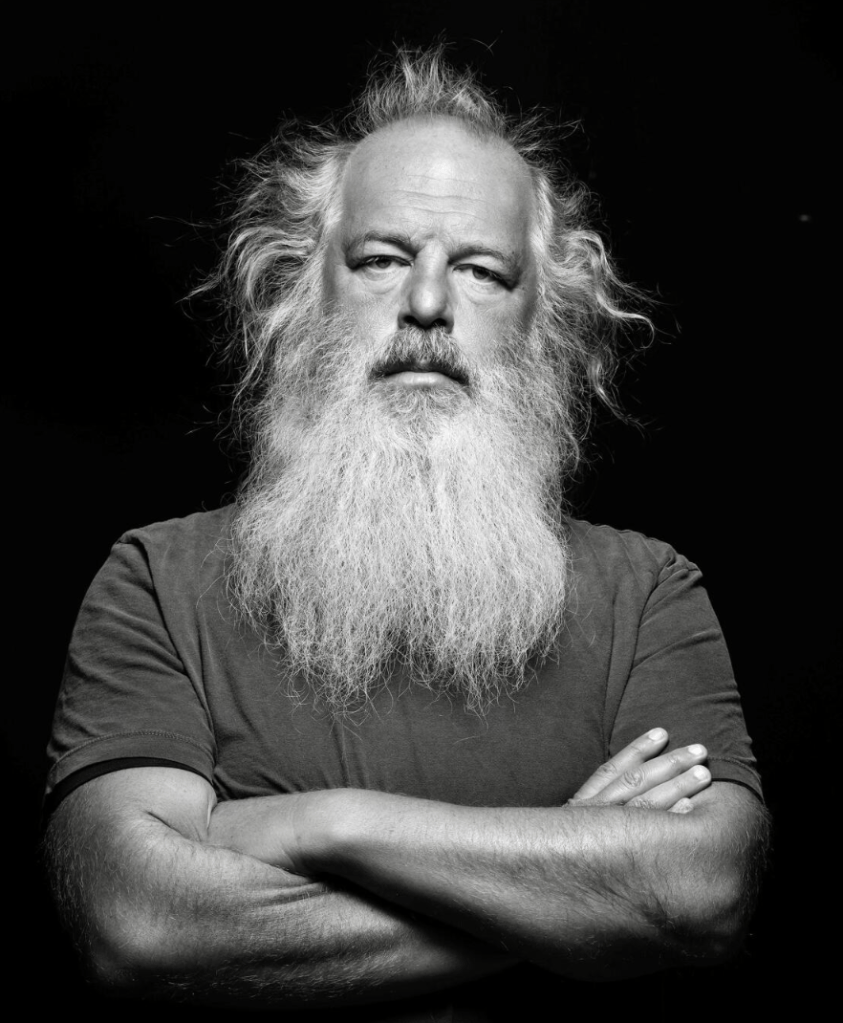
This is where I return to the reason for journaling and doing art or other things that help to ground us and connect us to ourselves, and that feeling of being connected to something bigger than ourselves. Consider Rick Rubin’s words from his book, The Creative Act: A Way of Being, when he writes;
“The act of creation is an attempt to enter a mysterious realm. A longing to transcend. What we create allows us to share glimpses of an inner landscape, one that is beyond our understanding. Art is our portal to the unseen world.”
WHERE DOES ART & WRITING COME IN?
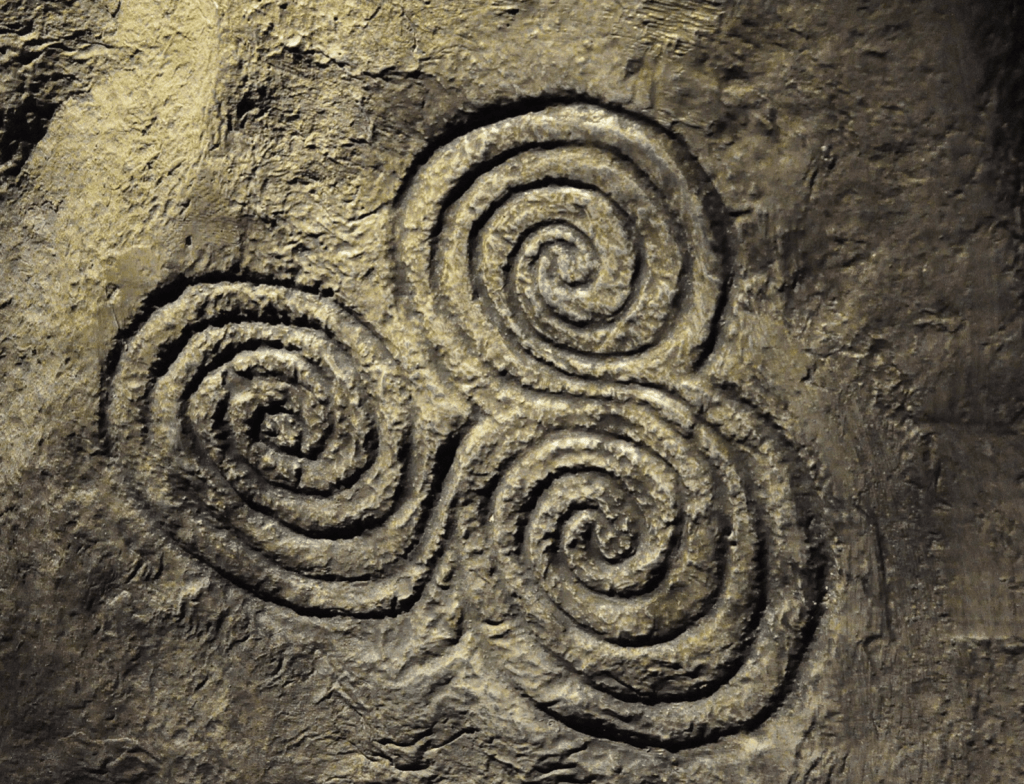
So why do I discuss journaling and art in this context? Consider that humans have been using symbolic language for tens of thousands of years—not only to communicate with one another, but importantly to communicate our personal experiences. One of the earliest ways we did this was to create symbols that represented our inner world and connection to something we may have felt into — that was bigger than ourselves. Take the spiral for instance — a symbol that has existed for millennia. It was used to communicate an internal experience and perhaps to represent observations of the natural world, like the way the Earth seems to descend into the darkness during the winter months, only to be reborn in the spring.
These early symbols were ways to express the internal experience of life and to foster a sense of trust and safety in an uncertain world. Life has always been fraught with uncertainty and danger, but we’ve banded together throughout history to seek patterns and find meaning in the chaos, using symbols to counter despair and fear. We also have an inherent desire to protect and preserve our world, passing on knowledge and hope through shared imagery.
Language along with these shared symbols, has been a powerful tool for expanding our perception of the world. This is where art and writing come into play—they provide an avenue for accessing the deeper layers of our consciousness, opening or adjusting that “reducing valve” of perception, allowing us to express and make sense of our lived experiences.
LANGUAGE ALSO CONTROLS THE VALVE
Humans possess this remarkable ability to share language—whether spoken or written—to communicate the thoughts in our minds to others. We are fortunate to live in a time when we have so many forms of communication at our disposal.
However, communication hasn’t always been about connecting with each other. In ancient cultures, communication was also a way to reach the divine. Symbols were etched onto temples, artifacts, and even cave walls, carrying profound meanings that spoke to both the human experience and the gods. Some of the oldest symbols are shared across the globe, illustrating a universal language of the sacred that comes from a shared repository, a collective unconscious that connects us all.
I like to imagine that the first humans who discovered they could invent a symbol that others could understand were engaged in something profoundly magical. It was a form of alchemy—the creation of written symbols that not only expressed our thoughts but also connected us to something deeper within.
This was a powerful moment in human history when language began to bridge the gap between the internal and external worlds, offering access to a new way of perceiving and understanding our existence. The symbols we created were a symbolic representation of concepts we were trying to understand and share.
Humans did that, and we continue to use language (and other expressive forms) to explore and communicate our understanding of the Universe and our connection to it.
THE MIRROR OF THE MIND
Yes, there are many factors that influence the restricting valve of consciousness but writing — particularly journaling — is one of the key tools I’m offering here. Writing becomes a mirror of the mind. We can take time to reflect on experiences in our lives or even the inner dialogue in our head. We can write about our feelings and explore what is coming up for us, or what triggers us – and we can amplify our understanding of our personal experience.

In a previous article, I mentioned that there are different kinds of journaling. Ernest Shackleton primarily kept a logbook during his expedition to the South Pole (which ultimately failed). This is not necessarily a journal that wrestles with internal struggles, but at times he may reflect on moods and challenges during the journey.
In contrast, Carl Jung’s The Red Book was his profound personal journey into the collective unconscious. In it, he explores his connection with ancient archetypal elements of our psyche, offering a rich example of how journaling — and in this instance also creating art — can serve as a deep tool for self-discovery and connection to something greater than ourselves.
INSIGHT JOURNALING & FOLDING CONTEMPLATION
I am discussing the importance of insight journaling, which is a self-reflective type of journaling about this journey we are on as individuals. One might journal to explore life’s purpose or to gain clarity on why they feel triggered by events happening in the world, or in their personal lives. A key to this process is taking one thing at a time, much like focusing on a single point in meditation.
I often refer to this as an act of “folding contemplation.” In this practice we fold inward, taking one aspect of our experience at a time seeking to learn from it. In meditation, this may feel uncomfortable – perhaps there is a dark mantra or particular phrase that haunts us, that we wish to know more about – a repetitive intrusive thought for instance, or a critical voice we carry.
If we take this in two parts, we may first meditate on this critical voice for instance, and then instead of blocking that thought, we become curious. What can we learn about that thought, the voice that may say something mean to us, or beat us up? We listen, but this does not mean we choose to believe it, we are trying to be curious about what is being communicated beneath that voice.
The second part is where more language comes in, the writing in the journal. We can break it down, what might we have learned?
Marty M: Journal entry Nov 17, 2024
When meditating today I heard the voice in my head again calling me “slacker!” This is a really painful voice and I have often tried to block it or put it in a bubble and let it drift away, but it is a persistent voice in my head and it has gotten stronger in the last ten years I realize. I allowed it in this time though, and I held the thought. Where does it come from? Why does it keep coming back? Do I believe it? The truth is I don’t believe it really, but it gets in my head and sometimes I hear it again and it reminds me of my principal in high school, Principal Strickland. I realize I’m still trying to live up to the expectations he had on us, and in particular his dismissal of me and my friends as nothing but slackers. I realize that when I start to feel lost in life, or stressed I hear that voice yelling at me, like Principal Strickland from the back seat, “Slacker!” I realize the voice is there though other times when I feel criticized, it’s become a trigger point for me. I realize that sometimes I drink just to shut him up.

LANGUAGE
The writing we do, and the language we communicate with can be painful at times as it was for Marty above, but we can examine these trigger points and we can delve into the trauma in our lives to understand more of what makes us tick. Writing provides a remarkable tool for not just communicating with others, but for tracking and working on things in our lives.
In closing, journaling and art offer us a unique opportunity to turn inward, to examine the deeper layers of our consciousness and the collective unconscious. It allows us to begin understanding the patterns that shape our perceptions and responses. By engaging in these processes, we can gain access to the reducing valve of consciousness, allowing us to gain clarity, find healing, and ultimately transform the way we interact with the world around us. The journey of self-discovery is not always easy, but it is through reflection and creative expression that we begin to unlock new perspectives and insights.
 Follow Your Myth