When I began this article, it was just meant as a short guide to understanding something I emphasize with clients all the time. The work in session continues outside of sessions and can be summarized by three words, Tracking, Processing, and Integration.
Now this is a simplification of the process of psychotherapy. It is meant to help people engage with their inner work – outside of sessions. It is also about learning to work independently of a therapist, rather than becoming dependent on a therapist. This is in part because I want people to independently gain insight into their lives – but this process also comes back into sessions where it can deepen a session and lead to more processing and integration.
DISCLAIMER: This is an example of processing things from Indiana Jones past that come from observing his interactions with his father, and the dismal way that he was portrayed in his apartment alone in the final film. It struck me that Indy has unresolved issues around his father – he is seen seeking dad’s approval in The Last Crusade. Any similarities to someone’s personal experience is coincidental, except to say that these are also universal themes, which is why they are useful to explore. Below is an example of Indy interacting with his father. You can see how he responds “Yes sir” when his dad pulls him up, then when he mentions being hit on the head he is looking for concern from his dad, which is not forthcoming. These scenes are played out as being funny, but for anyone feeling unseen by their father… they hit too close to home – and this scene is not the only time we see this dynamic.
Along the way, this article took on a life of its own as I pulled out the metaphor of Indiana Jones again. This is a metaphor I use with clients to help identify the triggers in their lives. I talk about Indiana Jones in that first temple scene in Raiders of the Lost Ark, when he is making his way through a throne room that has triggers hidden under moss on the floor. The triggers shoot deadly darts at our hero if he steps on them. I use this metaphor to talk about how we are looking to uncover the triggers in our own lives.

I’ve leaned into this metaphor a little more deeply to help talk about this idea today – and hope it fleshes out a little more of what it means to track, process, and integrate using Indiana Jones as a patient himself.

New Client Referral
Dr. Henry (Indiana) Jones Jr. Male, 65 years old retired professor of archeology and history. Symptoms of depression include lack of motivation, problems sleeping, and low mood. Additionally, Dr. Jones exhibits signs of anxiety/trauma – having repeated nightmares, flashes of anger, and most recently he assaulted someone he referred to as a “neo-Nazi” in a coffee shop.
History: Professor of archeology and antiquities. Undisclosed work during WW2 and the Cold War for the U.S. government. Recently divorced, following the death of his son. The patient is isolated and lacks a regimen for self-care.
Coping: Dr. Jones uses alcohol frequently. Spends much of his time alone and ruminates on his childhood more now that his days as a professor (and what he calls an adventurer) are done. No longer able to cope with an adrenaline surge, Dr. Jones is beginning to feel loss.

Psychotherapist Modality
As a Jungian and Depth psychotherapist, I often talk about the different ways we move through this lifetime. We can go through life and take for granted each waking moment, taking life at face value, or we can explore the nature of our reality from a more Depth psychological viewpoint. We can examine this story we are in, and how we can orient ourselves to observing the story as it unfolds.
From this viewpoint, we examine our lives not just based on our conscious decisions – but we acknowledge that consciousness itself is more complex (and more interesting) than what we perceive as our conscious selves. To a Jungian, this means understanding that we have our conscious lives, our personal unconscious, and what a Jungian would refer to as the collective unconscious.
Our conscious mind appears to be running the show most of the time, but appearances can be deceiving.
What we believe to be conscious decisions are influenced by the story of our lives. This includes our childhood and our developmental milestones. It may be determined by the philosophy we were raised within. It may be influenced by family dynamics, and how attached we are to our parents and siblings. It may be connected to loss, disappointment, and trauma that we barely remember, or do not remember consciously at all.
We have various influences for this unfolding life story we are living. The more we bring things to conscious awareness, the more we can integrate what we learn and grow in our lives. I simplify this explanation by encouraging clients to follow those three things, tracking, processing, and integrating.
This is in part about showing curiosity about the things that come up in life and identifying our reactions and what may be behind the reactions so that we can develop insights, and foster new reactions and coping mechanisms.
In psychotherapy, we are in the room with clients and we often reflect back things we observe about the unfolding story. We make observations about repeating patterns, and ways of coping that are healthy or unhealthy. At our best, we try to bring these things to conscious awareness. The goal overall is to help track a thread of your life so that you yourself can track that thread as well.
If we were to take the life of Indiana Jones for instance, we may reflect back that maybe he puts himself in danger as a way of coping with his past. The lack of a maternal figure in his life, and the lack of a warm father figure. Like any adrenaline junkie, I might ask Indy whether he must put himself in the path of rolling boulders or really must engage with the Nazis of the world. His nervous system has become primed for adventure though. He has compensated for loss and disappointment by seeking an adrenaline or an endorphin hit in these adventures. He tells me he many a time was dangling from cliffs, with his heart nearly ripped out – or watched Nazis get their evil faces melted. This all sounds horrifying.
I reflect back – that perhaps at some point his general curiosity and intellectual interest in history and antiquities was not enough of a balm for his loss at some point and led to his mad-cap adventures around the globe.
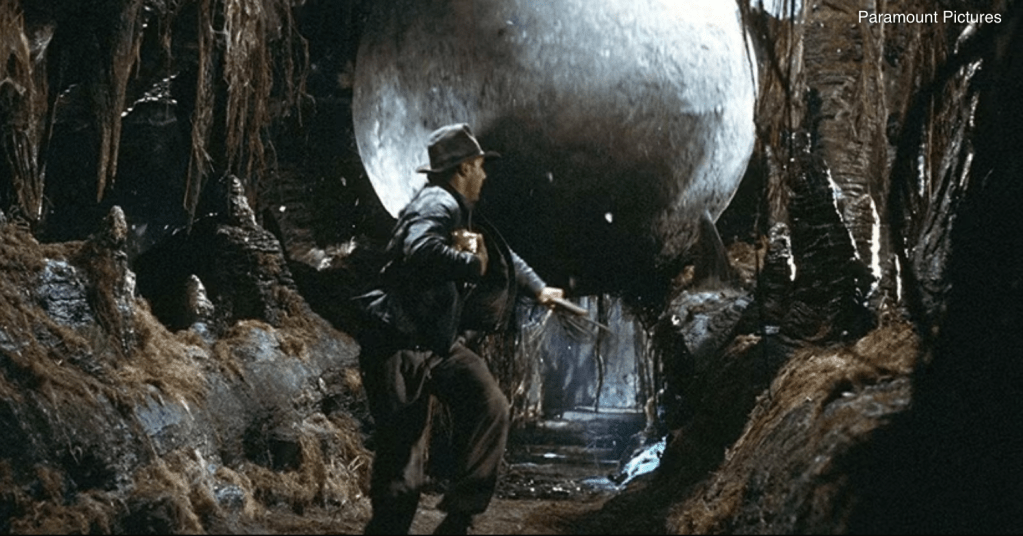
I’m using Indy as an example of things that might be worth examining in an exaggerated way of course, because he is not real. I would wonder though if his adventures kept him busy to protect his heart from feeling the disappointment of his father and loss of his mother (I honestly don’t remember him having a mother – so I’m making some guesses here).
I’m trying to track what is going on for Indy. When did he feel the need to flee the country on a whirlwind map montage?

In therapy, the things we track may be different depending on what we carry.
If someone is processing trauma, then we may be tracking those things that trigger a trauma response, as well as the details about that response. If we are tracking moods, like depression or anxiety, we are looking to track those details. What in particular may have been happening when they felt anxiety rise, or depression descend upon them and press them down so much they felt like they could not get out of bed?
What doctors and psychologists refer to as symptoms, we can also use the word clues. What clues can we track in our lives that help us to understand some of what we may be struggling with? What may we be carrying?
All of this requires some work though. When people show up to therapy, the goal is to help track, process and integrate and admittedly, this is a very baseline practical level of explanation. It’s important though for clients to be part of the process.
Can they learn to track the triggering moments in their lives? Can they avoid the poison darts?
PROCESSING
Let’s say that Indiana Jones comes in and he is doing the work. He is journaling about his experiences now – this is an example of processing. Another example may be expressing emotions around something.
Processing doesn’t necessarily happen separately from tracking and integrating. We may sit at our journal and track what happened during the day, “I lost my temper” may be the thing we are tracking. Then we process. and integrate.
Let’s say that together in session Indy and I were talking about his confronting the Neo-Nazi in a coffee shop. He admits that he was carrying his dad’s journal on the Holy Grail with him. He had been looking at it while walking and remembering their adventure of finding the Grail together. He explains that as he walked he became more unsettled. So, I might give him a prompt to write about.
Prompt: How did your mood change when you found the journal in your pocket? What came up about your dad and how did it make you feel?
But Indy has decades of stuffing his emotions, he may not even know what I’m talking about. He may have some resistance to journaling. If prompted about his dad he may simply write, “My dad was the best man I ever knew.” Admiring his dad’s intellect – he gets quiet and he stops journaling. When he reads this to me, I may respond that two things can be true, he may greatly admire his dad, even while he is experiencing disappointment or other emotions about his dad.
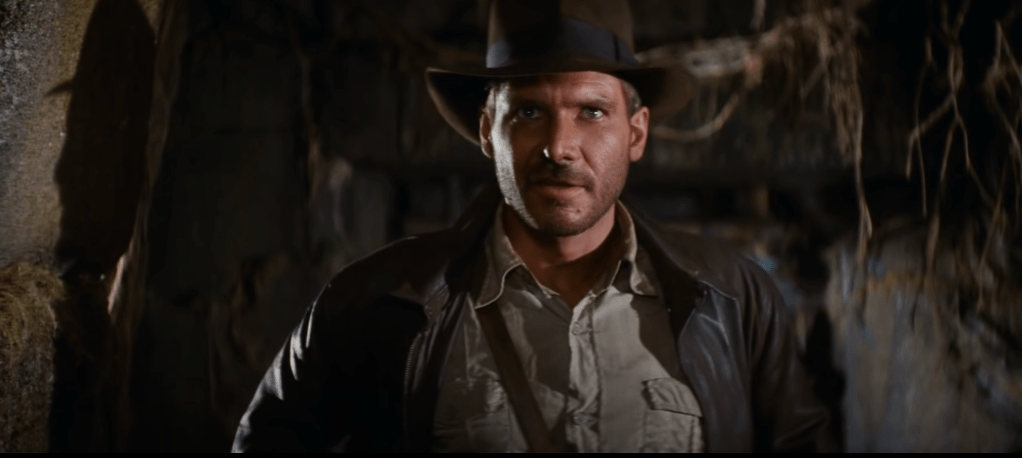
Maybe over time, Indy puts down the drink he usually has in the evening. Instead of stuffing his emotions, he sits down and journals about his dad. He may realize that his dad’s coldness and unyielding perfectionism affected him, leaving him to feel alone and like he was never enough. Nothing he ever did would be big enough to get Dad’s approval. Nothing he ever did could get his dad to be proud of him or say he loved him.
INTEGRATING
Indy continues to track, process, and integrate the work on himself. Progress is never a straight line. He may have moments when he feels completely free of the past – and then when he is with Marion (Ravenwood) he has a flash of feeling rejected, or like he has failed her somehow. He is transported back to the throne room in South America, making his way across the floor in his mind trying not to hit the triggers that shoot poison darts. He is trying to uncover maybe a new trigger, maybe something else that is unresolved that comes up which he feels is not complete.
Indy reaches out to his old friend Sallah. He explains that there is someone he left behind that he has been haunted by for years. Sallah calls in all his favors and together they track down the little boy that Indy left behind decades ago. He didn’t just leave Shortround behind though, as his mentor he began to teach Shortround history and languages like Latin. He taught him archeology and increasingly put more pressure on Shortround until one-day Shortround had vanished like he first appeared, into a crowd. Indy was perplexed when he left.

In my alternate vision for how Indiana Jones ends he doesn’t end up in a sad apartment like the last Indiana Jones film. * (Note I watched the first 20 minutes of the film and then after the flashback to a younger Indy – I found it insufferable – so technically it starts with a sad apartment, I don’t know where it ends, but it should not have even begun in this place.)
In my re-envisioned version, Indy goes on to have a rich career writing books and owns the family home he grew up in. After his son died, he and Marion adopted kids from other countries – and Shortround is there with them. Indy realizes that treating Shortround as a sidekick was simply repeating what his dad did, so he opens his heart to Shortround and makes amends. Shortround was a son to him, and he realized that he was repeating the past by putting so much pressure on Shortround, and increasingly leaving him behind as he went on adventures alone.
Indy’s adventure ends when instead of running around the world he faces the ghosts of the past. He takes his father’s study and turns it into a library for the children they adopt. He continues to journal though as pieces of his past float up. He continues to track, process and integrate the threads of his life experience, even the mundane things.
In his new life, bustling with connection and activity we see him reach above his father’s library door and hang a sign that reads.
The unexamined life is not worth living
~Socrates~
WHAT IS YOUR END?
It’s fun (and goofy I admit) to imagine what the life of someone may become in fictional characters. Real life is harder, it is a lifetime of tracking, processing, and integrating. It is a lifetime of finding meaning from loss. It is risk-taking, emotions expressed, chance encounters, and sometimes imminent betrayals.
The question returns to how we can track those triggers in our inner throne rooms, so we can process, and integrate and thus avoid the poison darts that come from within.
 Follow Your Myth