Awakening the Soul’s blueprint from Aristotle to Jung
I’m thinking about the concept of stuckness in life, and how it’s challenging to recognize when we’restuck. We may be stuck in a certain job, a relationship, or a lack of a relationship. We may be stuck with a philosophy of life that is no longer serving us, and we never pause to ask – is this working for me anymore? We may feel stuck in a job, a city, or a circumstance in our lives.
Everyone gets stuck at some points in their lives. I have lost momentum countless times trying to make my way in this life. I have been mesmerized into thinking I am limited by a physical condition. I have become frozen in those cold resentments that whisper, others have it easier than I do. I have been mired in the dark swamp lands, where the words echo, “they don’t understand me, or what I’m going through!” I have been reduced, collapsing internally into smallness by anger and flattened by despair at times in reaction not just to outward circumstances, but because of the unmet places within myself. At other times, feeling the frozen place I am able to observe this place and grow from it.
Perhaps some of these things I’m voicing are familiar sounding. We go through life wrestling with what it means to be human, and part of that struggle is our effort to awaken into our own lives.
What does this mean to awaken though? If the opposite of awakening is to be asleep, then the goal is to be awake and present for all those experiences in our lives. Essentially, to grow with our lives.
Life is an often-confusing roller coaster ride of emotions and experiences that range from joy to loss, from hope to despair, from certainty to self-doubt, from confidence to self-recrimination.
We have the potential to awaken through the same experiences that can challenge us, though, those stuck places. We do this by facing ourselves. In those moments, we can choose to turn inward, when the difficulty arises – and I’m in no way suggesting this is always easy to do.
I’ve begun to hint at where this path leads. In my view, we all reach tension points in life—moments when we can either freeze, collapse inward, or move toward the inner friction and grow from it. Freeze, collapse or growth.
This growth to me can be described as a soul awakening. Perhaps it is more comfortable to think of it as psyche expanding. Ultimately, I believe it is an expansion of consciousness itself.
AWAKENING THE SOUL
In the Red Book, Carl G. Jung lamented, “My soul, my soul, where are you? Do you hear me? I speak, I call you—are you there? I have returned, I am here again!”
At this time, Jung was going through the darkest period of his life. At the edge of madness following his break from Freud — he descended into his unconscious, into deeply liminal spaces often described by mystics. He wrote, “I had to accept that what I had previously called my soul was not at all my soul, but a dead system. Hence I had to go down into the depths, to the primitive and the dark, the maternal and the chaotic.”
We know a great deal about Jung’s soul journey because he wrote a massive book about his visions, that we know as the Red Book. This book is filled with his mystical-like encounters at the edge of madness and creativity. Jung himself questioned his own sanity, even as he stood on stage presenting on the subject of schizophrenia. I have written in the past that each of us in our lives is like Shiva Nataraja, poised on one foot between creativity and self-annihilation, between expansion of consciousness or collapse. Parallels to this are easily illustrated in these extraordinary journeys Jung recorded in his Red Book.
What Jung explored occurred in his darkest of times, when he began to collapse inward on himself. It is not clear what all the influences were that led to this tension point in Jung’s life. We know in part it was because of his break with Freud, perhaps his break with Sabina Spielrein also played a part. The result was this growing dis-ease in his life and an intuitive movement toward finding his own remedy. The remedy would be found in exploring the mythical imagery he found himself floundering in.
In other words, Jung felt this place of tension. His ego awareness, his consciousness, was limited by his experience in life, and he arrived at a crossroads. He needed to either expand his consciousness around his new awareness of his life experiences, or he would collapse inward into madness. In seeking growth, Jung went toward the bubbling up of imagery from unconscious places. He showed curiosity and paid attention to urges to create, he paid attention to his dreams, and he wrote of his experience from different places in the experience. He wrote from the unconscious places spontaneously, and wrote more analytically expanding on what he had written.
Much of our insight into the psychology of the unconscious and the collective unconscious comes from Jung’s personal struggle with his own unconscious. To put it in simple psychological Jungian terms, we grow into the person we were meant to become, we individuate and become more fully ourselves in life, if we go toward the things that are essentially creating friction for us.
It isn’t enough to acknowledge that there is a “soul journey” though but rather to acknowledge that it is a matter of expansion of consciousness that I am speaking of in this article. In other words, if we consider that to become an adult is not merely the end goal of being human, then we start to question what the end goal is. We may even ask, is there an end goal in our development?
Perhaps we never actually stop developing on this soul journey, this consciousness expansion that happens in this lifetime.
DYNAMIS OF THE ACORN: ARISTOTLE & HILLMAN.
As so often is the case for Jungian psychology, the more modern ideas of Jung, return to more ancient ideas to speak of the unfolding of one’s psyche, one’s spirit.
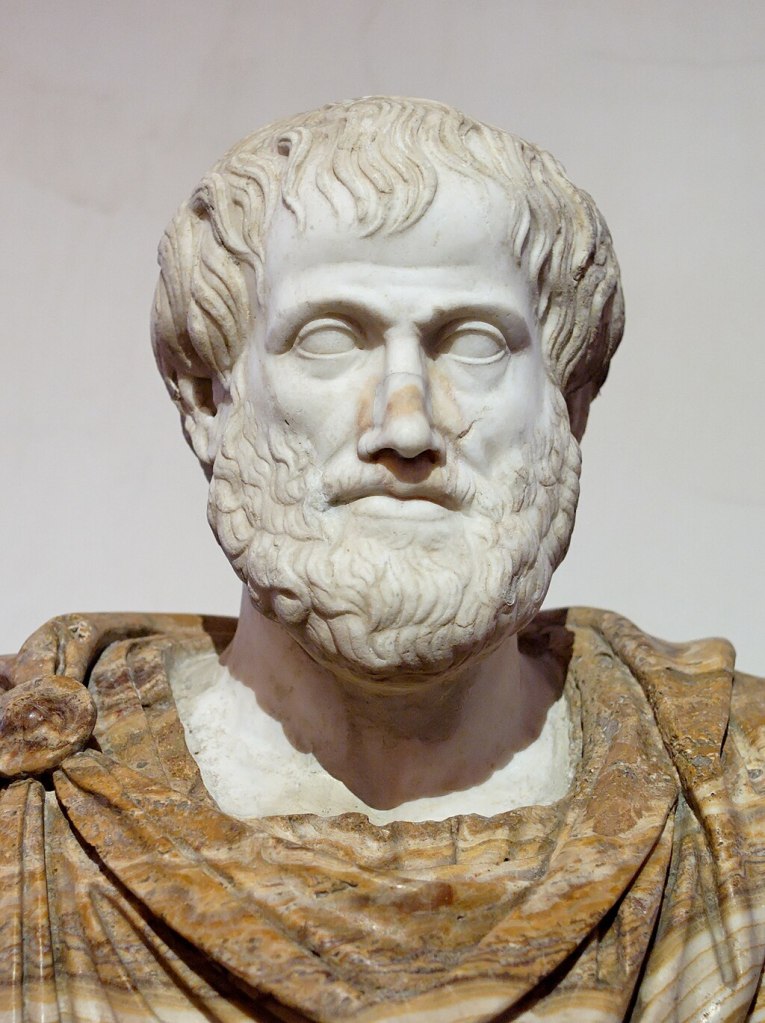
Aristotle, the ancient Greek philosopher, may have been the first to use the metaphor of the inner potential (dynamis). James Hillman, a Jungian psychotherapist, expanded on this idea using the metaphor of the acorn to the oak tree, specifically, expanding on Aristotle’s dynamis. Hillman encapsulated the idea of potential in the symbol of the acorn, which will become an oak tree.
For Aristotle, there is something he referred to as telos, an end, goal, or purpose to a seed, let’s say an acorn, for instance, using Hillman. We think of this in modern terms, saying the acorn contains the blueprints for the oak, or more accurately, the genetic makeup that will become the oak. In short, the acorn holds the material that will express itself fully as an oak.
We enter this life with potential as well, like an acorn that holds the blueprints for the oak tree, yet each step along the way is to awaken, to unfold into our lives in that moment. We have the potential, but we will make mistakes, and we may get stuck at times. For humans, this adversity, though, can provide us with the friction in our lives that challenges us. We may not always be ready for these challenges, and we may find ourselves at times contracting, rather than growing.
That stuck quality of our lives is when we lose that forward momentum of growth. With each challenge, we can expand outward like the oak. This is not something that is necessarily noticeable from outside of oneself, because it is an internal growth.
When describing this process to clients, I often take my hands and make a shape in front of myself as if holding a crystal ball. I tell them that if our consciousness is contained in that sphere of how we perceive our self, then when something challenging occurs, we can go in a few directions. I contract my hands together and show the sphere collapsing, one hand tightly balled into a fist, nested in the other hand. This is how it looks to contract inward, to get defensive, and to not grow.
This is one experience of being stuck, I explain.
The second way is that we can freeze. I illustrate this by having my two hands holding the invisible ball of consciousness with fingers lightly touching; in this case, there is no growth.
Finally, I make my hands go back into the two hands holding a crystal ball loosely and I tell them the opposite happens if we can get unstuck. It’s then that we can feel our consciousness expand, and I spread my hands out as if to encapsulate a bigger awareness. The invisible crystal ball that represents Self is bigger than before, we have grown.
SOUL’S EIDOS – TRUE FORM: PLATO
The contraction and expansion of consciousness begins the moment we come into this world. At first, we are aware of only primal sensations such as hunger, cold, and touch. Over time, this awareness gradually expands outward, and consciousness grows.
The sphere of our self-awareness expands.
Plato may have been the first to speak of the Eidos, the unchanging, Eternal forms or Ideas, that Jung would later resonate with as archetypes. These eidos represent true reality, the inner blueprints upon which our outer forms are modeled. For Plato, these ideals are not learned but remembered, inscribed within the soul before birth, and life is a process of recollecting them.
In his allegory of the cave, Plato offers a profound metaphor for psychological and spiritual awakening. In his allegory, people are chained in a cave and can only see the shadows projected on a wall from firelight. Mistaking these shadows for reality, they live in ignorance. One person breaks free from the cave and ascends to the outside world, and perceives reality for what it truly is. When he returns to help the others break free from the cave, they resist. They remain stuck in the cave, preferring the familiar comfort of illusion.
Plato’s cave is a fitting representation for the human condition. It shows us our submission, our resignation for how we perceive life and our own part in our story. We remain trapped in our cave, in the psychic structures of our minds when we cling to shame, blame, anger and our rigid ideas on our identity, and reality.
Thinkers like Aristotle, Plato, Jung and Hillman all offer us insight into this life we live, and the nature of our unfolding consciousness. The implication is that it is not enough to simply grow up, but that we are always presented with opportunities to expand our consciousness, moving closer to our soul’s true form, the eidos within, we individuate as Jung would say, and become more fully ourselves.
BECOMING UNSTUCK: Process, Integrate and Synthesize.
How then, can we become unstuck when our perception of the world is the shadows on the walls, not the true forms of the world outside, or even of our self? How do we become disentangled from this stuck place in life? How can we find that true purpose in our life, and unfold more fully into our self?
As a psychotherapist, I believe the answer is to look for clues of when we are stuck, and how we arrived in that stuck place. These are charged emotional places when we feel angry, hurt, shame, or blame others, for example. When we can be curious about the places we feel stuck (and the clue is that it may feel painful), then we can begin to take some actions to become unstuck. Here are three ways to think of this:
We process, integrate and synthesize.
Processing: We look for ways to process these difficult places in our lives, and this may mean doing certain things like journaling, art, and talk-therapy. This processing allows us to fold with what comes up as we look to find some understanding of where we are, and why we are feeling triggered, or lost, or simply unhappy. This is the work we put into ourselves, the heavy lifting.
Integrate: Processing points the way, it shows us where we are stuck intellectually or emotionally. We work with what has come up again and again to integrate these lessons, which may mean more of the same, but let’s add in meditation to help integrate, as well as reading something around the subject, we may be feeling stuck or triggered. When we are integrating we are taking the work we do, and we are integrating it into the fabric of our being. We reinforce that fractal essence of our mind.
Synthesize: When we synthesize the information that we have processed and integrated then we begin to develop a landscape within our minds that we can express ourselves from. This looks rational, it looks like we are being authentic, and accountable. We can recognize a place we got stuck, and the details around those places, and most importantly, we have learned to articulate what we synthesized, at the very least to ourselves, if not to anyone else. Often, we know we have synthesized an experience because we can put into words what we understand, and the self-defenses that once protected us from seeing ourselves clearly, begin to dissolve.
I’ve written more extensively elsewhere about journaling and meditation, so I won’t elaborate here. What’s important is the principle: to turn toward what disturbs us, rather than away. The discomfort we often avoid may hold the key to what is keeping us small.
There are many more paths to explore, and this piece is only a beginning—a way to frame how we might think about the soul, the psyche, and the unfolding of consciousness. This is not a roadmap, but a pebble dropped into a vast ocean, meant to ripple outward and stir something in you.If you feel stuck, let that feeling be the beginning. Be curious. Be honest. And remember: the work of becoming ourselves ebbs and flows like the tides. We keep allowing ourselves to expand our awareness and grow outward by breathing in insight from our lives and experiences, like filling our metaphorical lungs with the air that can help us grow into the person we are meant to become.
 Follow Your Myth