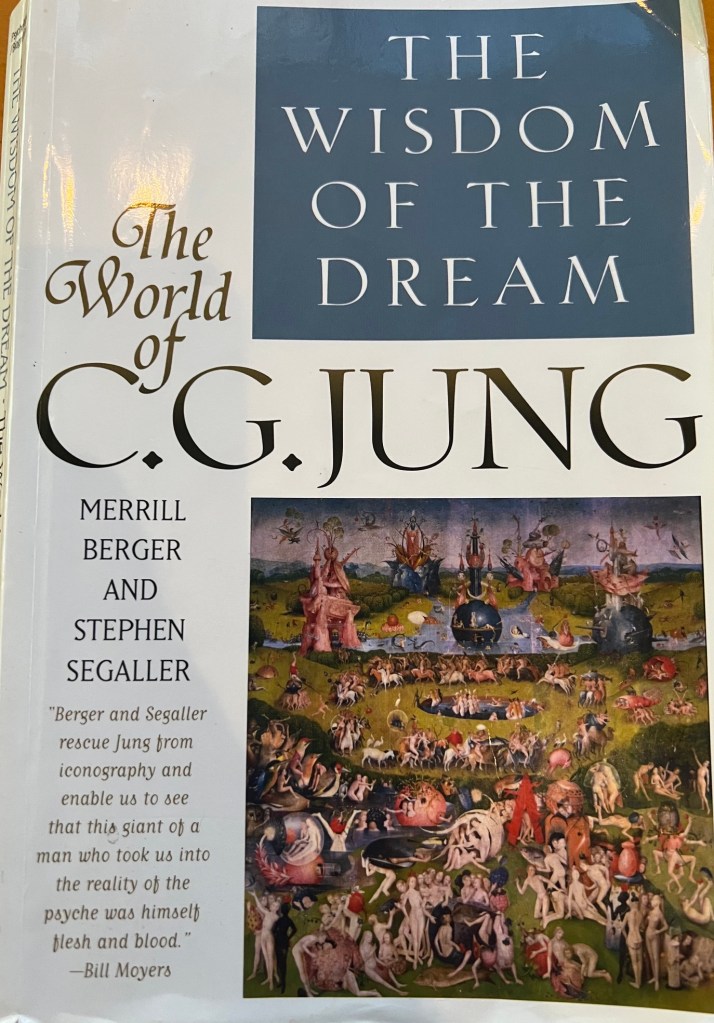
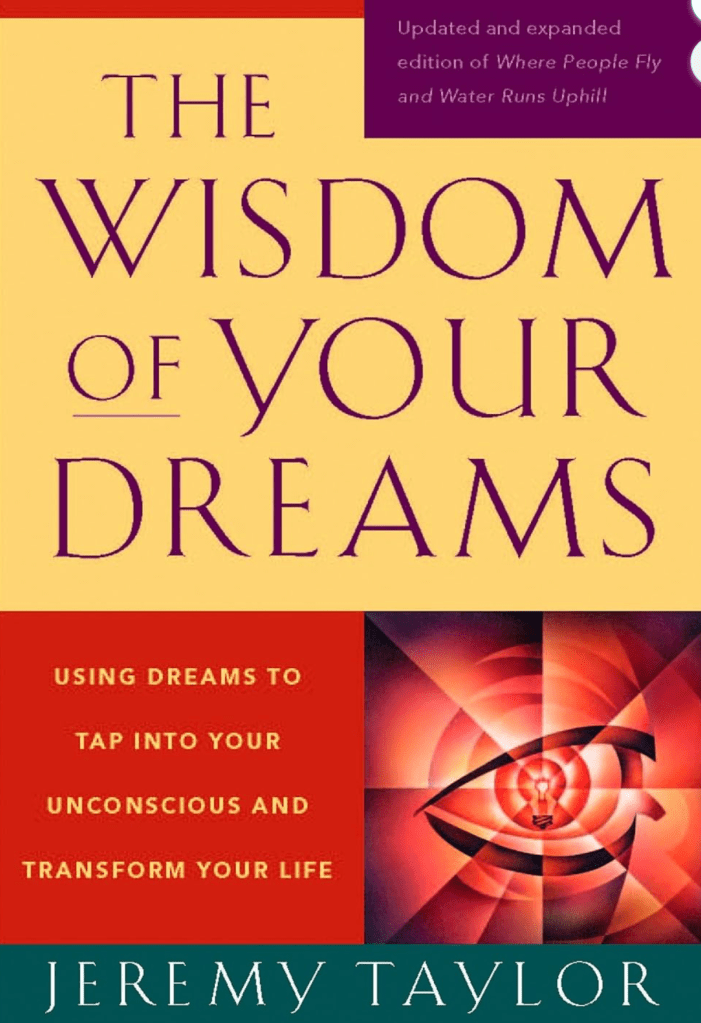
Many books discuss dream analysis from various angles. Some are more psychologically minded, and I tend to favor the books based on Jungian concepts of dreamwork and the unconscious, such as The Wisdom of the Dream by Merrill Berger and Stephen Segaller. Others, like Jeremy Taylor’s Wisdom of Your Dreams, feel more easily digestible and solid, examining dreams and the complex meanings of a dream. It offers the ability to wrestle directly with the imagery, suggesting interpretations on different levels, all of which may be true at the same time.
There is another group of books meant to be more like an encyclopedia that someone can open and find an interpretation of a symbol. Often, I find these books helpful in introducing symbolic imagery, but less helpful in that they offer generic interpretations as if each symbol means the same for every person and every dream. If we look at these sources as an encyclopedia that contains a collection symbols and notations on their origins, they are more helpful.
The various types of books have value in what they can offer us when it comes to examining and reflecting on our dreams. They can feed our curiosity, fill us with imagery, and illuminate things in our lives. All these books offer the ability to reflect and to create habits for examining our dreams.
They are like going to the gym and using the exercise equipment that shows us how to work out and what movements to make. They teach us new symbols and how to examine things from archetypal realms. If, for instance, you are not familiar with a symbol like a winged horse flying, and a book tells you the origin is Pegasus from Greek history, then we find some context, and we may begin to understand we are in archetypal realms. This may overlap, though, with the stuffed toy Pegasus you had as a child, which brings in a personal association.
The encyclopedia book may try to interpret this simply, meaning something like, “you wish to be free.” This is the book making an association for us, and this is where Freud and Jung would give us space to make our own associations before offering interpretations, if they offered any.
Admittedly, symbols are never precise because interpreting dreams and understanding them is not like simply looking up something in a book. Our dreams are expressions of the unconscious, and if we follow Jung’s work, the Collective Unconscious.
A NOTE ON USING Ai
Using Ai to interpret dreams feels like trickier territory to me. I want to believe it could be helpful. On the one hand, it is possible to receive information from both those streams, the Jungian and psychology camp and the encyclopedia of symbols camp, to allow us to find insight into a dream. If used I might ask Ai to tell me about the Pegasus rather than asking it to interpret my dream.
The reason is that I believe that Ai is problematic in that it undermines our curiosity, and instead of being like the gym equipment that helps us with form, it is instead doing all the heavy lifting, and we bypass wrestling with the dream and trying to understand it. The Ai in this case would be like going to the gym with an exoskeleton that is lifting the weights for us, and that is not helpful at all.
We are meant to wrestle with our dreams, because in wrestling we are creating new neural pathways, and this exercise allows more access to dreams and growing insight as we develop this muscle ourselves.
JUNG ON DREAMS
In his book, Memories, Dreams, Reflections, Carl Jung tells the story of becoming more aware of archetypal figures around himself as he went deeper into his interest in the unconscious. He had conversations with Philemon (an archetypal wise old man) and others who would help him to decipher the meaning of dreams. These imaginary conversations he wrote about and pondered for decades, eventually arriving at the phrase “Active Imagination” to describe this process of working with his dreams and transforming them into insight.
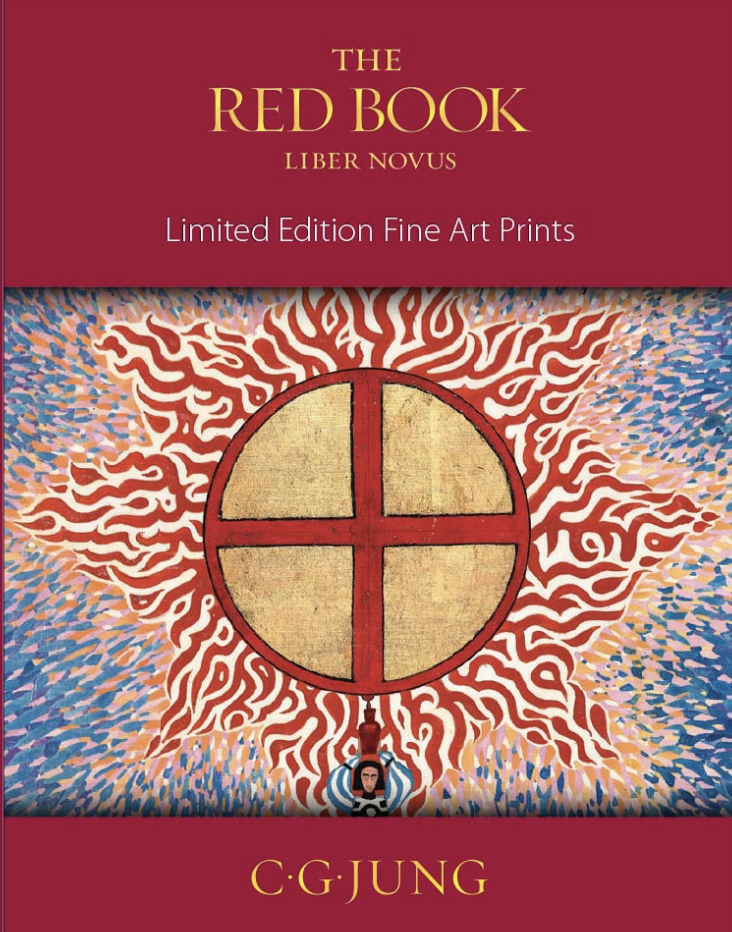
Active Imagination is a deliberate method where Jung worked with the unconscious, such as a dream image. In this way we can work with a dream image that may feel unfinished, or as though we are trying to receive the meaning from it. This can be done to follow a dream when we are awake, and one way to do that is to be curious, “I wonder what happens next?” Inviting a question may allow us to access the unconscious spaces associated with a dream again.
We can experiment with this ourselves by journaling about a dream, putting ourselves back into the dream in our imagination, and then dialoguing or imagining what is next allowing the unconscious to continue to express something.

Jung writes in Memories, Dreams, Reflections on dreams and what they expressed and his disagreement with Freud in how to approach them, writing:
I was never able to agree with Freud that the dream is a “façade” behind which its meaning lies hidden—a meaning already known but maliciously, so to speak, withheld from consciousness. To me dreams are a part of nature, which harbors no intention to deceive, but expresses something as best it can, just as a plant grows or an animal seeks its food as best it can. These forms of life, too, have no wish to deceive our eyes, but we may deceive ourselves because our eyes are shortsighted. Or we hear amiss because our ears are rather deaf—but it is not our ears that wish to deceive us. Long before I met Freud I regarded the unconscious, and dreams, which are its direct exponents, as natural processes to which no arbitrariness can be attributed, and above all no legerdemain. I knew no reasons for the assumption that the tricks of consciousness can be extended to the natural processes of the unconscious. On the contrary, daily experience taught me what intense resistance the unconscious opposes to the tendencies of the conscious mind.
Jung, Carl Gustav. Memories, Dreams, Reflections (pp. 193-194).
JUNG’s DREAM OF SIEGFRIED
Jung was learning through his own personal suffering how to approach his dreams with growing curiosity, but his understanding did not always come after one dream. He tracked his dreams by writing them or often drawing and painting images that he could not understand in order to amplify them and to draw out new associations.
Now we can say associations, but another way of saying this is information. This is because I believe that with each dream, information is expressed in dream imagery. Although we may sometimes feel we understand a dream, we can explore this dream to receive more of the information that is intertwined with this experience. Sometimes we can explore a strong dream many times, returning to the symbolism or the takeaway again and again – and I have written about this in my articles on the Ouroboros dream I had years ago.
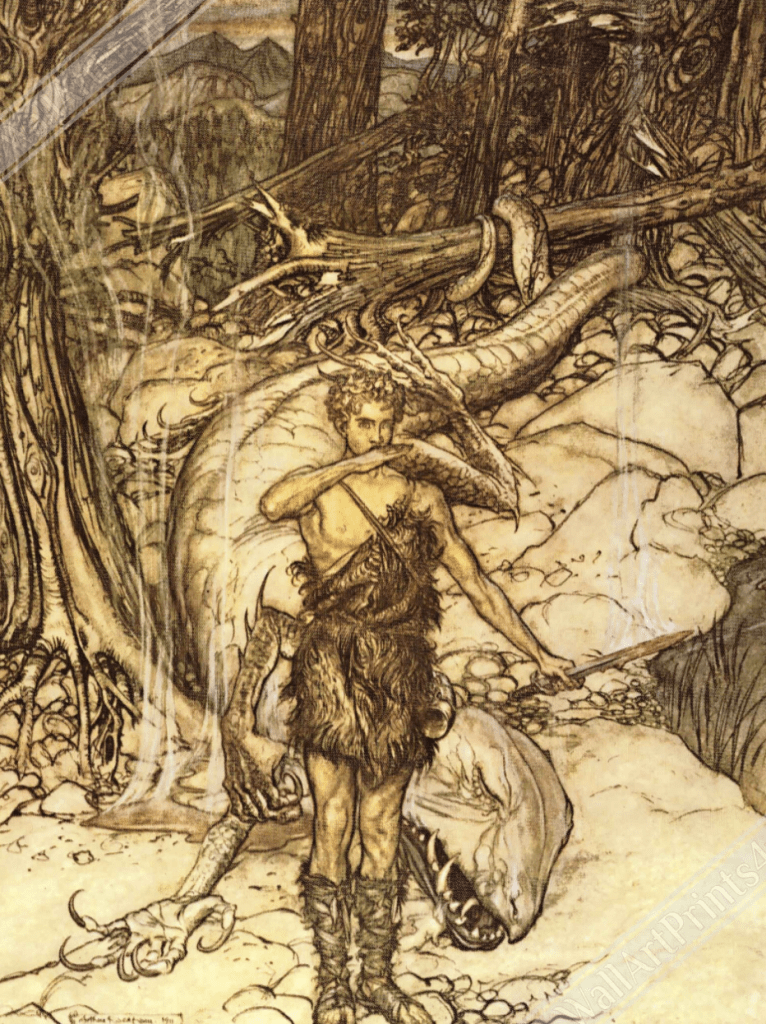
In one dream, Jung dreamt of Siegfried, the hero from Wagner’s epic opera Der Ring des Nibelungen, also known as The Ring. When Jung woke, he immediately felt it was imperative to interpret the dream or die trying. He wrote:
When I awoke from the dream, I turned it over in my mind, but was unable to understand it. I tried therefore to fall asleep again, but a voice within me said, “You must understand the dream, and must do so at once!” The inner urgency mounted until the terrible moment came when the voice said, “If you do not understand the dream, you must shoot yourself!” In the drawer of my night table lay a loaded revolver, and I became frightened. Then I began pondering once again, and suddenly the meaning of the dream dawned on me.
“Why, that is the problem that is being played out in the world.” Siegfried, I thought, represents what the Germans want to achieve, heroically to impose their will, have their own way. “Where there is a will there is a way!” I had wanted to do the same. But now that was no longer possible. The dream showed that the attitude embodied by Siegfried, the hero, no longer suited me. Therefore it had to be killed.
Jung, Carl Gustav. Memories, Dreams, Reflections (p. 216).
RECEIVING THE MESSAGE
Jung here is talking about something that I try to explain when it comes to dreams, and I am building on Jung’s words here, adding some of my language for understanding how the unconscious makes itself known. Remember what Jung said above, “To me dreams are a part of nature, which harbors no intention to deceive, but expresses something as best it can…”
The unconscious expresses something. We feel a dream build within us at night; a field of information builds into a cohesive field that is expressed as a dream. My understanding of this is that when the dream ends, and this field, this bubble of consciousness that is expressed, collapses, we are released from the dream and often wake to roll over.
If the dream feels significant, we may have trouble returning to sleep as though urged by our unconscious to receive the message, in this way we are still within the bubble of awareness that was expressed and this is why we may have difficulty sleeping again.
I am not suggesting we wake for hours each night to write dreams, but jotting down some notes when we feel an important dream is coming through is something we can return to in our waking hours. Writing them down may also satisfy that field of awareness that expressed something, so that we can sleep again.
Because Jung was steeped in psychology, philosophy, literature, mythology, and religions, he could often access understanding of his dreams that is more elusive for all of us who do not have the encyclopedic knowledge he possessed. His knowledge is breathtaking to behold as you read through his many books and writings.
Still, even Jung didn’t know everything at once; he often followed his curiosity, continually collecting information and new experiences, and often sat with a dream he didn’t understand artistically to amplify the image.
One way that I work with a dream that contains imagery I do not understand is to research. If I don’t have the information in my book collection, then I can turn to other sources like Wikipedia to find out what Pegasus is in Greek mythology (in this article I turn to the Metropolitan Museum of Art). A good trick in our digital age is to use the search function in a book of mythology in my digital library where I can easily find Pegasus to start to wrestle with this image.
ACCESSING THE FEELING TONE
Another way is to try to access the feeling tone that was expressed in the dream. When I wake from a dream, I may ask, “What is the feeling that was just expressed?” In allowing a sense of the feeling tone to wash over me, I have a starting place. I may think, “Oh, I felt terrified and lost in a big city.”
This feeling tone does not always come. This is because this is a process of giving attention to subtle internal states. We can allow ourselves time to return to the dream to try to understand the experience and what was being expressed, if instead of focusing just on the images, we tune into the feelings that were present.
Ultimately, we want to get a feeling that we are working with the dream, and this means sitting down with it the next day and doing some writing to let the dream return in our minds. We take the few details we jotted down in the middle of the night, and we write more about what happened in the dream. As we engage with this, we are doing something that I have referred to as surfing the wave.
SURFING THE WAVE
I have come to understand this as surfing or riding a wave of information or energy that just collapsed from the dream that I experienced. When a big dream comes, I may get out of bed after jotting down a few details, and then I head downstairs to the kitchen late at night and begin to write.
I am trying to ride that wave of information that I felt expressed in my dream. Like Jung, I feel it is so imperative sometimes that I cannot return to sleep, as if my unconscious will not allow it until I have fully received the message. I think we all know this feeling, and although I’m not suggesting this were true all the time, we may sum it up often as insomnia or trouble sleeping one night when we are caught in that bubble of awareness around a dream.
It is important to understand that before I begin writing, I do not have to know the meaning of the dream. I am holding the image in my head and the feeling tone that was expressed. These things are in me, but like trying to access a flow state when making up a melody on a guitar, I do not yet know what will come. The act of writing about the dream is like paddling a surfboard on the ocean to build momentum and catch a wave. Once we are moving, we may feel ourselves lifted by that wave, and that’s when the writing becomes more effortless, and we are making associations to the dream. This is the flow state.
SAMPLE DREAM
Here is what an example may mean, and I’m mixing some real imagery with some fake samples here. The dream images I jotted down may have been, “I was in New York City, the skyscrapers like pyramids. I was moving through tunnels within the buildings trying to find my way. I made it to a rooftop where a winged horse was. “
This is what I may have written in the middle of the night. When I’m awake, I can revisit the images, make associations, and feel into it.
I’m moving through these dirty corridors; it is more like being under NYC Port Authority when I commuted to the city. I see now that I spent years of my youth passing through the city much like a ghost. I didn’t know the city; I just commuted to work. There is the sense here in this dream that I do not know this city, which is somehow also my city. This city I grew up seeing across the bay in New Jersey.
There was the fantasy that I would “arrive” as I made it to that gleaming city. Growing up, it was much like seeing the Emerald City from The Wizard of Oz. It promised opportunity and connection and art. Instead, I felt lonely, beaten down, and like a ghost moving among other ghosts through subway tunnels. I worked impossibly long hours and commuted hours each day. Occasionally I would escape to the Metropolitan Museum of Art. On one occasion, so frustrated with my job, I just walked out, and instead of taking the subway, I walked from the Soho area all the way uptown to the Met. My shoes were not made for walking, but I refused to go into the tunnels again that day. I walked until my feet were blistered, and when I got to the museum, the bottoms of my shoes had worn holes through them.
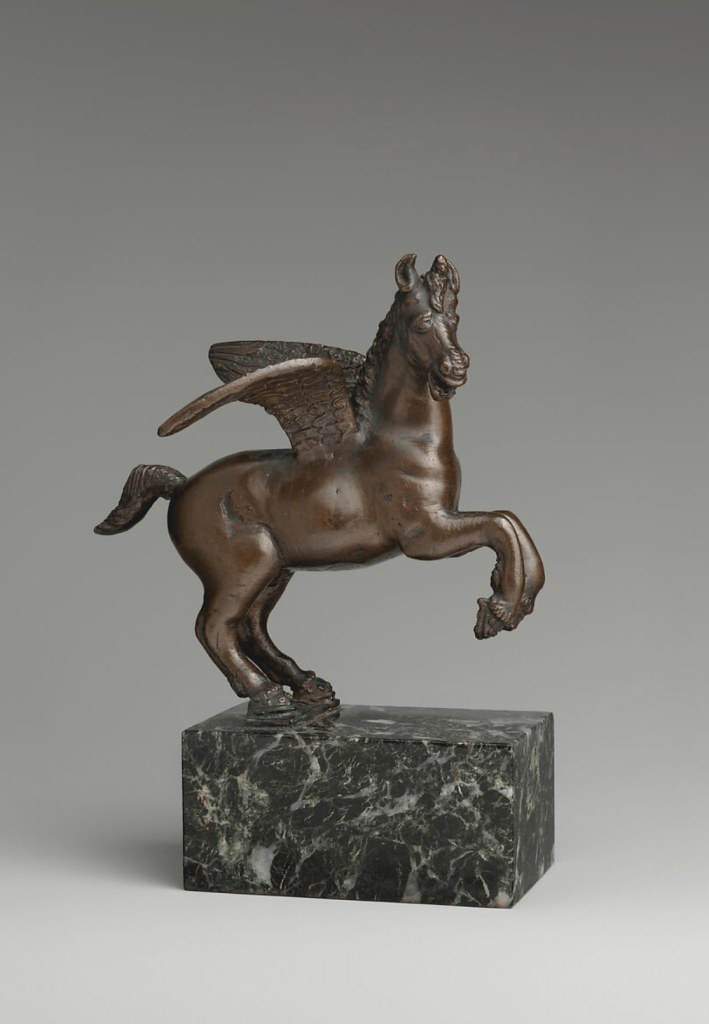
I walked through the museum, and it was a reprieve from my misery. I was back in those spaces from the past with archetypal figures from every culture. My association to Pegasus is from the Met, I must’ve seen it at various times in the museum and wondered at what it meant.
From the Met: The mythological winged horse Pegasus was companion to the muses on Mount Helicon. Rearing up and striking his hooves on the ground, he created the Hippocrene spring, a font of intellectual and poetic inspiration. Renaissance humanists appropriated this subject to symbolize the classical source of their creativity. The Venetian scholar Pietro Bembo, for example, famously chose rearing Pegasus as his personal emblem.[1] By the mid-sixteenth century, statuettes such as ours had become popular accoutrements to the scholar’s study. Displayed on tables or shelves, they embodied their patrons’ erudite aspirations.[2]
THE WAVE ENDS but WRESTLING CONTINUES
We can stay on the wave as long as we want or as long as it yields some insight. Whether we write a sentence, a paragraph or a page is up to us. In general, though I feel that a “big” dream has a bigger wave that we are riding, and therefore we get to ride longer and the thing about it is if it is not done expressing itself, it will return another night.
I said at the beginning of this article; We are meant to wrestle with our dreams, because in wrestling we are creating new neural pathways, and this exercise allows more access to dreams and growing insight as we develop this muscle ourselves.
I’m suggesting that there is more to us than this waking version of ourselves that has to move through the day. We can give attention to this side of ourselves and perhaps find some relief from the suffering of our waking life by going toward these things and exploring them. We can give attention to the unconscious as Jung implored us, and we can always return to a past dream as we build up our own language for expressing these fields of awareness that are expressed within our dreams.

